 Svalbard
Russia puts Svalbard settlements in Arctic strategy
Published . Edited : wording only, no fact changed.
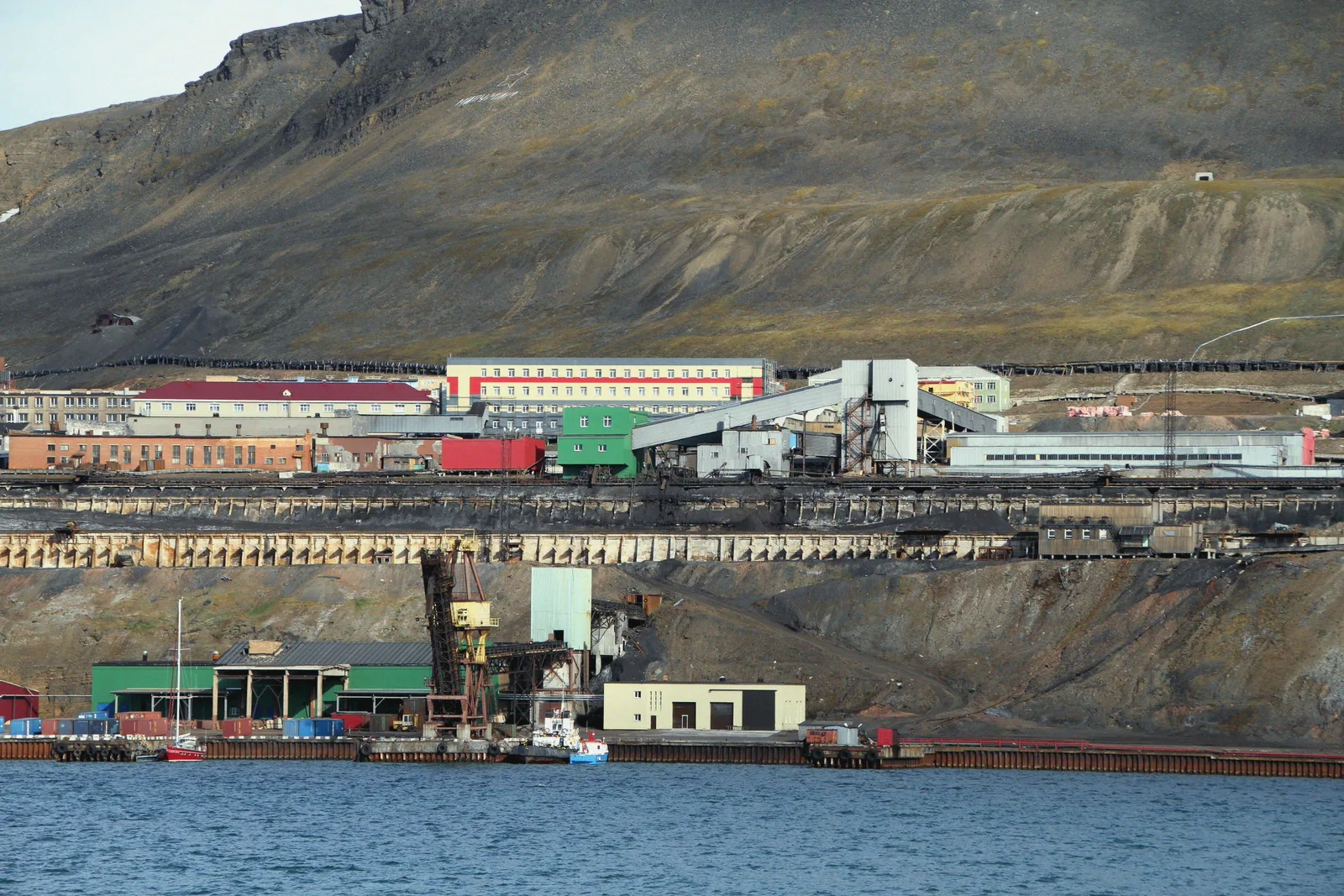
Russia made the development of its settlements on Svalbard a state task in a new Arctic strategy that President Vladimir Putin signed on Thursday 26 November.
The document names Svalbard twice in its lists of tasks. One task is to implement the master plans and the long-term development plans of the Russian settlements on the archipelago. The other is to secure the Russian presence there on the terms of the Svalbard Treaty of 9 February 1920.
The 2020 strategy, which this one replaces, had worded this differently. It set the Russian presence on terms of equal and mutually beneficial cooperation with Norway and the other parties to the Treaty. The 2026 task names the terms of the Treaty and does not name Norway.
Separately, the 2026 strategy said that attempts were being made to restrict Russia's activity on Svalbard, which it called lawful and in full accordance with the Treaty.
The Norwegian government said that Norway's sovereignty over Svalbard was undisputed, in its white paper on Svalbard of 2023 to 2024. Individuals and companies on the archipelago had to follow Norwegian law and administration in the same way as on the mainland.
What the document is
Decree No. 872 approves the strategy and repeals the one of 2020. Russia's official legal portal published the 62 pages on the day of signing, in Russian.
The strategy covers the period to 2035, with an outlook to 2050. It gives Russian state policy in the Arctic four goals. They are to protect Russia's national interests there, to develop its Arctic zone, to reach the country's national development goals and to ensure national security.
It defines the Arctic zone as the territory of Russia in the Arctic. That is land named in a federal law, the waters next to it and the continental shelf. The document names ten priority areas, and Svalbard stands in the task lists of two.
The two tasks for Svalbard
The first is one of 21 tasks under living conditions. It is to ensure that two kinds of plan are implemented: master plans for the development of territories, and long-term plans for social and economic development. They are the plans of the Arctic zone's core settlements, of the Russian settlements on Svalbard and of their infrastructure.
The strategy defines a core settlement as a place in the Arctic zone that has priority in development. That development helps to reach Russia's national development goals and to ensure national security in the Arctic. Other tasks in the list cover housing, local roads, public transport, small aircraft for places that no road reaches, and internet access by 2036.
The second is one of 24 tasks under strategic stability and international cooperation. Beside the Russian presence on the Treaty's terms, it covers the development of the settlements. It also covers diversifying the work of Arktikugol, the Russian state coal company, including through tourism.
The same list sets out to counter what the strategy calls the anti-Russian activity of other countries in the Arctic. It aims to stop attempts to limit Russia's use of its rights and jurisdiction in its Arctic zone. Another task is to protect Russian citizens and organisations from unlawful acts by foreign countries, also when they do business in the Arctic.
Cooperation in the Arctic Council is one task, on an equal and mutually beneficial basis and proceeding from Russia's national interests. Good-neighbourly relations with the Arctic countries are another, as is joint work with them on search and rescue. A further task is to develop cooperation with Arctic and other countries that are constructively disposed towards Russia.
Another is to support and develop a website in several languages about the development of the Arctic zone and Russia's work in the Arctic. The last task in the list is to form what the strategy calls an objective perception of Russia's Arctic policy. It includes helping to spread information abroad about Russia's achievements in the zone.
Other countries in the strategy
The sentence about Svalbard stands in the strategy's account of the situation in the Arctic. That account said that European countries criticised Russia's activity in the Arctic without evidence.
It said that the EU, NATO and their member countries were pursuing a policy of containing Russia in the Far North.
The strategy lists four main risks to its plans. The first is stronger military and political pressure on Russia from unfriendly foreign countries. The others are a shortage of skilled workers, oil and gas reserves that are harder to extract, and the effects of climate change.
A Russian analyst and the Professor Molchanov
Rosbalt published comments on the strategy from two Russian military analysts on Friday 27 November. Andrei Klintsevich, head of the Centre for the Study of Military and Political Conflicts, told Rosbalt that he saw no clear grounds for a sudden escalation or direct fighting in the Arctic.
Klintsevich said that a repeat of provocations, such as what he called Norway's seizure of the Professor Molchanov in Barentsburg, could not be excluded while warlike rhetoric from Europeans continued, Rosbalt reported.
The Governor of Svalbard (Sysselmesteren) arrested the ship in Barentsburg on Wednesday 2 September, on an order from Nord-Troms District Court. The court had granted the Ukrainian company Naftogaz the right to seize it. The Governor said that the case was part of Naftogaz's fight to recover funds expropriated by Russia in 2014.
The master plans
Russia's government commission on the country's presence on Svalbard had the master plans on its agenda on Friday 14 November 2025, the Russian government said then. Arktikugol had drawn them up with Vostokgosplan after an order of September 2024. Vostokgosplan is a Russian state research centre for the development of the Far East and the Arctic.
The Russian government's account of the meeting singled out coal mining and tourism among the directions of development. Mining was to keep the volume that Arktikugol needs for its own work, and tourism was to reach 50,000 visitors a year by 2040. The restoration of buildings had begun in Barentsburg and Pyramiden.
Defence, shipping and targets
The strategy's defence tasks include raising the combat capabilities of the Russian forces stationed in the Arctic zone. Their combat potential is to be kept at a level that guarantees they can repel aggression against Russia and its allies. Other defence tasks cover military infrastructure and a system to watch the air, the sea surface and the waters below it in the Arctic.
Several economic tasks concern the Trans-Arctic transport corridor. The strategy defines it as one system of routes along the coast of Russia that includes the Northern Sea Route, inland waterways and transport infrastructure. Among the tasks are nuclear icebreakers, ports, and railways to the Arctic harbours.
Another task is to develop cruise, ecological and other tourism, in part by removing what the strategy calls excessive regulatory restrictions.
An annex sets 17 targets for 2030 and 2035. Cargo on the Northern Sea Route stood at 37.9 million tonnes in 2024, and the target for 2035 is between 110 million and 150.6 million tonnes. Jobs at new enterprises in the Arctic zone are to rise from 16,200 to 200,000, and life expectancy from 71.93 years to 79.1.
The stages
The strategy also sets out what is to be in place by 2054. Russia is to have guaranteed free, safe and full access to Russian and international land and sea areas, transport routes and natural resources in the Arctic. Settlements of the Arctic zone are to get electricity and heat from autonomous units, small nuclear power plants among them.
The strategy is to run in stages: from 2026 to 2030, from 2031 to 2035, then every six years. It is to be adjusted after each stage, or when the president decides. The money is to come from Russia's budgets and from sources outside them.
Under the decree, the Russian government has six months to prepare a full plan for the Arctic zone and the Trans-Arctic transport corridor. It is to send the president a report on the strategy every year by 15 June.
Written by the editor with the Wire's software, from the sources listed below, and checked against them before publication. The editor answers for every story. How the Wire is made.
Sources
Coverage: Interfax, TASS, SeverPost, Rosbalt
President of Russia
Meld. St. 26 (2023-2024) Report to the Storting (white paper): Svalbard
Government of Russia, 14 November 2025
Interfax, Press, 26 November 2026
Putin approves the Strategy for the Development of Russia's Arctic Zone
TASS, Press, 26 November 2026
Development of Russia's settlements on Spitsbergen included in the Arctic development strategy
SeverPost, Press, 26 November 2026
President approves the Strategy for the Development of the Arctic Zone
Rosbalt, Press, 26 November 2026
Challenges in the Arctic are growing: what response is Russia giving
Governor of Svalbard, 2 September 2026
Special: Russia on Svalbard
- Putin's envoy, who recently fought in Ukraine, says Russia will stand up for its rights on Svalbard (18 November 2025)
- Pyramiden science centre lacks foreign partners (10 November 2026)
- Checks in Russian settlements stepped up since 2022, Governor says (3 November 2026)
- Governor Fause says preparedness overtook climate in his term (24 November 2026)
- Svalbard stands out as a target of Russian influence, researcher says (1 November 2026)
- Professor Molchanov held in Barentsburg under court order (25 October 2026)
- No appeal filed against Molchanov arrest, courts reply (23 November 2026)