 Svalbard
 Climate Crisis: Inside Norway’s Arctic Village Warming Up to Seven Times Faster Than Global Average, Can Residents Save It Before Melting Glaciers and Thawing Permafrost Destroy Their Homes?
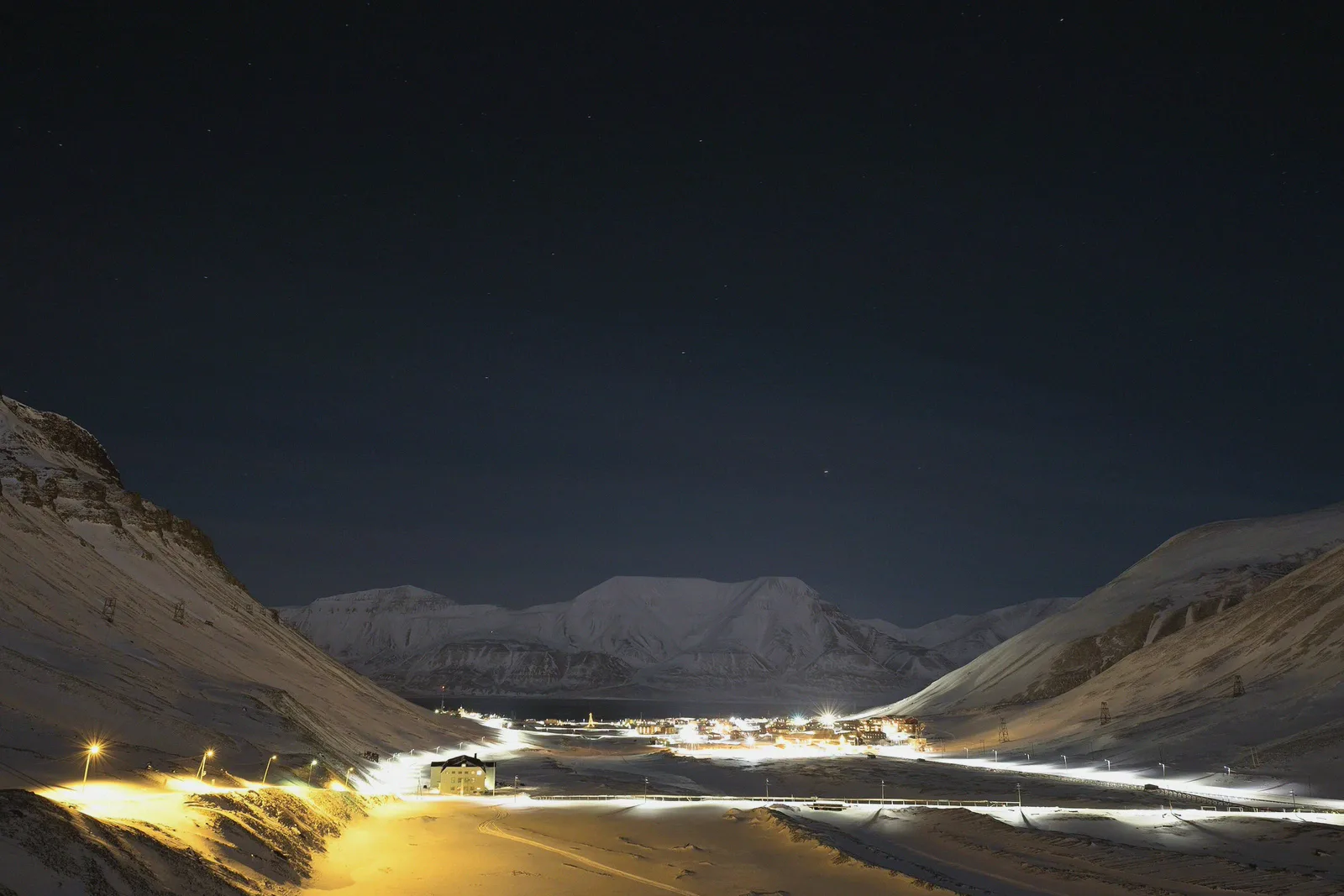
The Sunday Guardian, citing the Guardian, says Longyearbyen's tap water contains heavy metals that scientists link to thawing permafrost. An analysis of treated water from Isdammen, the dammed lake that is the town's main source, found high manganese levels in September 2025. Manganese can harm the nervous system after high doses or long exposure.
Marjolaine Verret, associate professor of Arctic geology at UNIS (the University Centre in Svalbard), said thawing ground and shale bedrock containing pyrite together cause the contamination. She said exposed pyrite produces acid that leaks into waterways feeding Isdammen, and that sulphate and nickel levels are also raised. Mayor Terje Aunevik said water quality was never good because of sediment, but manganese levels then rose sharply.
Aina Kvitsand of SINTEF, the research institute leading the water investigation, said several questions are open: whether the lake is fed by surface water, groundwater or old mine shafts, and how channels and quality will change as permafrost thaws. The analysis is part of the work by Longyearbyen lokalstyre (the local council) on a secure water supply. Council officials said the project grew from a limited purchase of desalination plants into a wider one. New filtration and a desalination plant are being investigated.
The Sunday Guardian says the town is warming five to seven times faster than the global average, and autumn temperatures are rising by up to four degrees Celsius per decade. The distance to the North Pole is about 1,300 kilometres. Avalanches have destroyed houses, and roads and areas have been closed. Two people died in an avalanche in 2015. A resident told a US newspaper that permafrost cracked his apartment foundation.
Verret said the same geology exists in northern Canada and Alaska. The Guardian reported that permafrost in the circumpolar region could shrink by 42% before 2050. David Barber, who studies Arctic climate at the University of Manitoba, said the effects would reach beyond the Arctic. Kim Holmén of Norsk Polarinstitutt (the Norwegian Polar Institute), who has worked in Svalbard for 35 years, showed journalists damaged soil outside the town. The town was founded in 1906.
Coverage: The Sunday Guardian, The Saturday Paper