 Svalbard
Norway takes over
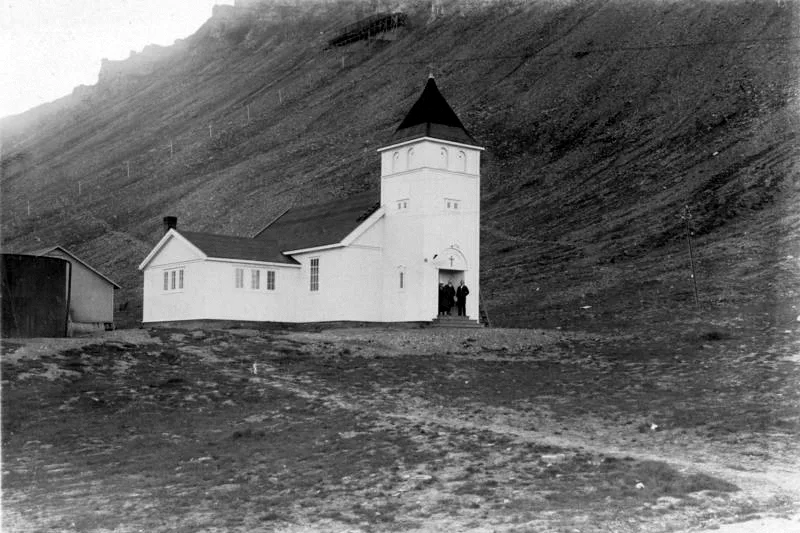
Norway formally took over sovereignty of Svalbard on 14 August 1925. The archipelago lies in the far north, and Longyearbyen, on Spitsbergen, is where the governor, the sysselmann, has his seat. Store norske leksikon says the archipelago became formally part of Norway on that date, and its article on the Svalbard Treaty gives the same day as the date the treaty entered into force.
The treaty itself had been signed on 9 February 1920. The lexicon says that by 14 August 1925 it had been ratified by the Netherlands, Britain, Denmark, the USA, Italy, France, Sweden, Norway and Japan. The jubilee history of Store Norske (the state-owned mining company) records that the treaty text grew out of a draft that Norway's envoy in Paris, Wedel Jarlsberg, sent to the peace conference commission in 1919. Before that, the archipelago had been terra nullius, a land belonging to no state.
The lexicon links the five-year gap between signing and takeover partly to the difficulty of putting the annexation claims in order. Helge Ingstad wrote that claims had been staked by people of many nations, usually with marker posts reported afterwards to their own governments, and that several companies often laid claim to the same field. The jubilee history adds that property relations were finally settled only from 1925 to 27.
The lexicon gives the result: of 74 reported property claims, 40 were approved, spread over 17 companies and private persons. Together they covered 4223 square kilometres, and the holders of these so-called treaty properties were given certain privileges. Ingstad printed a map of the areas. The lexicon says that Norway and the Soviet Union later bought out or redeemed many of the properties held by foreigners.
The takeover was set down in a royal proclamation. Fjørtoft's book on the trapper Hilmar Nøis says that the matter came before the cabinet on 13 August 1925, under a royal resolution of 7 August. The proclamation, given at Oslo castle on 14 August, declared that Svalbard, meaning the island of Spitsbergen with adjoining islands and Bjørnøya, was taken over that day as part of the Kingdom of Norway. The book adds that no signatory power protested. It also says the Storting had disagreed about whether Svalbard should be part of the kingdom. The government held that it should, and the Storting finally agreed.
Ingstad lists the laws made for the takeover: the Svalbard law of 14 July 1925, the tax law of 15 July and the mining ordinance of 7 August 1925. The lexicon records that the name Spitsbergen was replaced by Svalbard for the archipelago, and the largest island became Spitsbergen. The jubilee history says the first sysselmann, Johannes Bassøe, began work in 1925 without an office or a residence of his own, and that a mining commissioner post was filled from 1926.