 Svalbard
A Soviet steamer runs aground on the way to Barentsburg
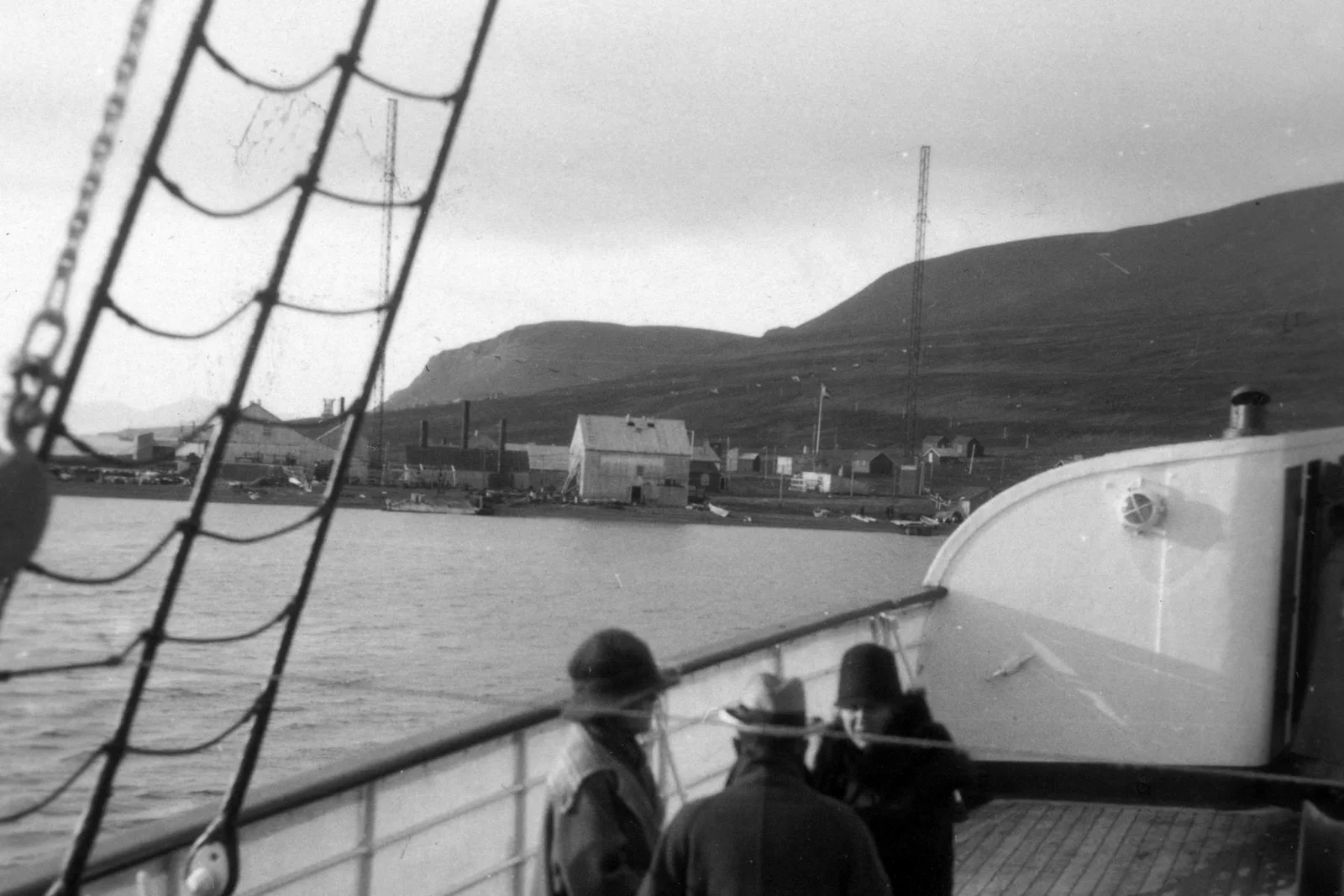
In the autumn of 1932 a Soviet steamer carrying workers for the newly bought mine at Barentsburg ran aground at the mouth of Isfjorden, the fjord that leads in to both Barentsburg and Longyearbyen. Store norske leksikon says Barentsburg lies on Grønfjorden, about 10 kilometres inside the mouth of Isfjorden and 60 kilometres west of Longyearbyen. The Dutch owners had sold it to the Soviet state company Arktikugol in 1932.
Aftenposten reported on 2 November 1932 that the steamer Tawaritsch Stalin had gone aground on the Monday on Røvikflaket, a shoal outside Isfjorden. Kongsvinger Arbeiderblad placed the shoal at Kapp Linné and said the ship had left Tromsø on the Friday with 126 passengers. Gula Tidend wrote that the men and women on board were bound for the Russian coal mines, with 700 packages of machinery as cargo. Finmarken counted 132 passengers and a crew of 36.
The Stalin called for help by radio. The Norwegian salvage steamer Jason was called out from Tromsø at two in the morning, Gula Tidend reported, but it needed two days to get there. The Stalin's sister ship, the Kristianini, also set course for the stranded ship, and Finmarken wrote that five English trawlers were on their way. The forepeak filled with water and the rudder broke, Kongsvinger Arbeiderblad said, and Aftenposten later reported a leak in hold number 3.
Nordlys reported on 5 November that the Stalin was pulled free around midday on Wednesday 2 November by the Soviet cargo ship Kristianini and five English and German trawlers. Haugesunds Dagblad wrote that the Soviet side had turned down the help of the Jason, and the salvage steamer was called home. The newspaper Tromsø reported on 17 November that the Hull trawler Solway Firth was the first ship to reach the Stalin, and that 160 people were moved from the Stalin to the Kristianini.
Adolf Hoel's history of Svalbard, published in 1966, tells the grounding differently in places. Hoel puts it off Hornsund, far to the south, among shoals and skerries, and says a wrong position made the search slow. He writes that the Chrestianin, as he spells the Soviet ship, drew too much water to come close, and that the British trawlers Solway Firth and Capel reached the Stalin. By his count about 150 passengers, several of them women, were taken aboard the Chrestianin before the trawlers pulled the Stalin off and the Chrestianin towed it to Grønfjorden.
The two trawlers then pressed a salvage claim against the Soviet side. Tromsø reported on 21 November that evidence was heard at the town court, and that 70 telegrams had passed between the Stalin and the trawlers before the salvage began. On 26 November the same paper wrote that a temporary repair of the Stalin was finished and that the icebreaker Lenin was on its way to Green Harbour to tow it to Murmansk.