 Svalbard
Power plant leaves coal
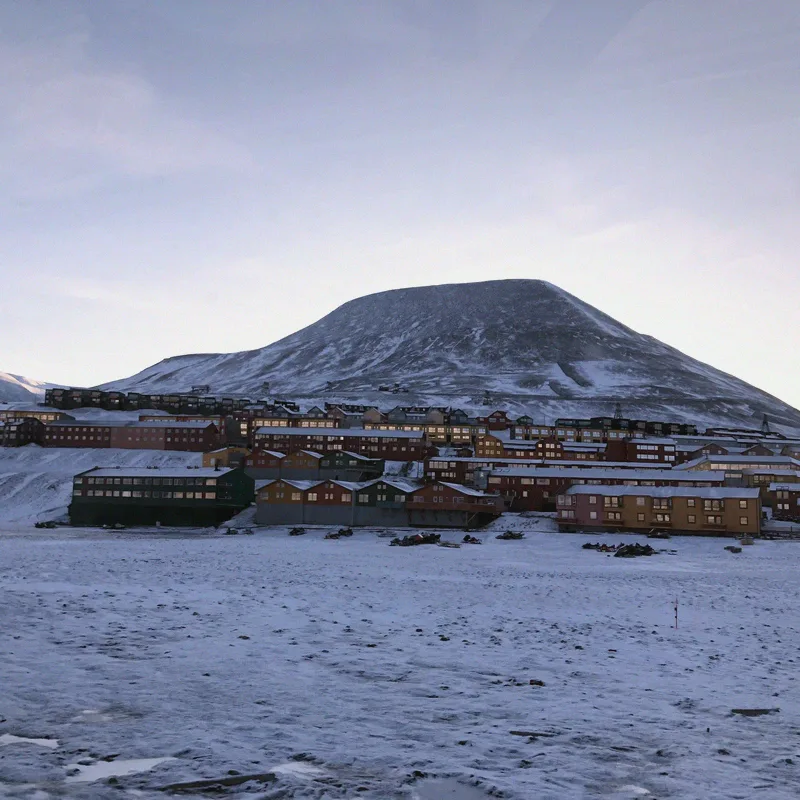
On 19 October 2023 the coal-fired power plant in Longyearbyen, the main settlement on Svalbard at 78° North, was switched off. Polar Journal reported that Hugo Olsen and Odd Jostein Sylte of Svalbard Energi pressed the button at 10:20, and NRK wrote the same day that the furnaces would be turned off on Thursday 19 October, with diesel replacing coal. The Barents Observer said this ended the work of Norway's only coal power plant, also the world's northernmost. Store norske leksikon dates the change of energy production to mid October 2023 and calls it a temporary measure until a greener energy source is decided.
The Barents Observer reported that the plant had supplied heat and electricity to Longyearbyen since 1983, producing 11 MW of electricity and 20 MW of thermal heat, and that environmentalists had long criticized Norway over coal mining and the coal plant on Svalbard. Polar Journal said they had called for this step for years and that the plant's predecessor ran from 1920. The jubilee history of Store Norske (the state-owned mining company) from 1991 notes that Norway, as a hydropower nation, had no coal-fired power stations apart from the local one in Longyearbyen.
According to the timeline of Longyearbyen lokalstyre (the local council), the council decided on 9 November 2021 that the coal plant should close in September 2023, with the diesel reserve solution rebuilt as fixed production in an interim period. The contract with the coal company Store Norske was terminated. On 21 June 2022 the council decided to carry out the project Overgang til nytt energisystem, to reduce the risk and cost of running the coal plant further. On 15 November 2022 it confirmed that the move to diesel would take place in autumn 2023, and on 1 January 2023 the energy supply was transferred to Svalbard Energi AS.
High North News reported on 29 September 2023 that the council had approved Svalbard Energi's plan for the diesel transition at its meeting on 19 September. The expected cost was NOK 212 million. The approved proposal told the council to seek talks with the state on co-financing and to intensify the phasing in of renewable energy. The transition meant a reduction of 13 posts at Svalbard Energi by June 2024. The plan put the switch at the turn of October and November, once the tank facility was filled with winter diesel; the plant was in fact shut on 19 October. The site also reported that the risk analysis named fuel shipping to Svalbard, and the tanks and distribution in Longyearbyen, as weak points, and that Store Norske had extended operation of Gruve 7 to summer 2025, partly as a backup for the energy supply.
The Barents Observer wrote that locals were asked to come to the shutdown, and that Svalbard Energi's invitation spoke of the end of a chapter in the town's history. Guttorm Nygård, manager of Svalbard Energi, told NRK that coal had been the backbone of Longyearbyen since the beginning, and, according to Polar Journal, that the diesel price was uncertain because of the war in Ukraine and the war in the Middle East. NRK gave 2,600 residents; the Barents Observer wrote of nearly 2,500. Polar Journal said the switch avoids about 35,000 tonnes of CO2 a year and that the coal plant would be kept for one year as a backup. The Barents Observer said diesel aggregates will be the main energy source for the nearest future, with a 7 MWh battery pack, the largest in Norway, in place for short interruptions, and a long-term aim of zero emissions from solar, wind, bioenergy, geothermal and batteries. In the same month the local newspaper, weekly since 1948, became a monthly paper with a web edition, the lexicon says.
The government press release of 24 November 2023 said the change from coal to diesel had cut emissions by 50%. It proposed an extra NOK 50 million for the local council in 2023 to support lower power prices, on the condition that the coal plant is not taken into use again. Store norske leksikon records that coal from Gruve 7 in Adventdalen, east of Longyearbyen, went to the plant until mid October 2023, and that the mine closed at the end of June 2025.