 Svalbard
Avalanche in Longyearbyen
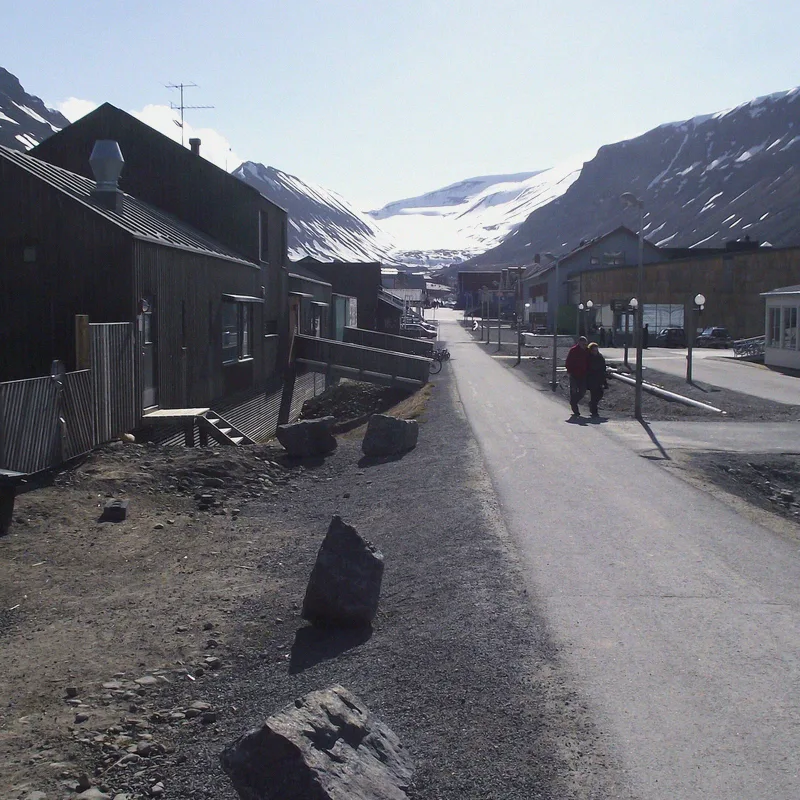
On 19 December 2015 a snow avalanche came down from Sukkertoppen, the mountain above the town of Longyearbyen on Svalbard, and hit houses there. Store norske leksikon says the slide struck ten residential houses and killed two people. The Polar Journal wrote in 2021 that one of the two dead was a child. A UNIS (the University Centre in Svalbard) article of 2017, written with NTNU, and a UNIS press release of 2021 give eleven houses instead of ten, and the 2017 article says the houses were lifted off their bases.
On the cause, the UNIS and NTNU article quotes Alexander Prokop, an avalanche researcher at UNIS, who said that 18 millimetres of precipitation were measured at the airport, while the crown of the avalanche, where it broke away, was up to 4 metres high. The UNIS and NTNU article says strong winds had deposited up to 4 metres of snow on the slopes behind the site. The government white paper Meld. St. 32 for 2015 and 2016 has a text box on the event. It gives the cause as old snow with weak layers, new snow, warming and a strong easterly wind. It puts the slide at about 200 metres wide, with two dead, several injured and almost 200 people evacuated.
The white paper also says the avalanche mobilised the whole community, which made a large effort for lives and for those affected, and that it showed the need for assistance from the mainland. Varsom reports that local avalanche warnings for Longyearbyen began as a temporary measure days after the accident, to assist evacuations by local authorities. Public warnings for Svalbard followed on Varsom in February 2016. The UNIS and NTNU article says the water resources and energy directorate, NVE, now operates a warning system, and that the authorities made a new risk map for the town.
The UNIS press release of 2021 says the avalanche showed the need for better avalanche knowledge in polar regions, and a doctoral thesis at UNIS followed. The 2017 article says Prokop and his students took measurements after the avalanche to fine-tune a computer model for forecasting.
Store norske leksikon records a second slide in February 2017 that destroyed or badly damaged two buildings. It adds that building of a new housing field in Gruvedalen began in 2018, that homes in Lia are evacuated whenever danger of slides is considered present, and that demolition of 140 homes in the exposed area started in December 2019. A UNIS text of 2022 says avalanche fences were built on Sukkertoppen after the 2015 and 2017 avalanches, and that an embankment about 400 metres long and 5.5 metres high was completed in the autumn of 2021. The December 2015 avalanche from Sukkertoppen that killed two people in Longyearbyen remains the starting point of these measures.