 Svalbard
The Mine 1 accident
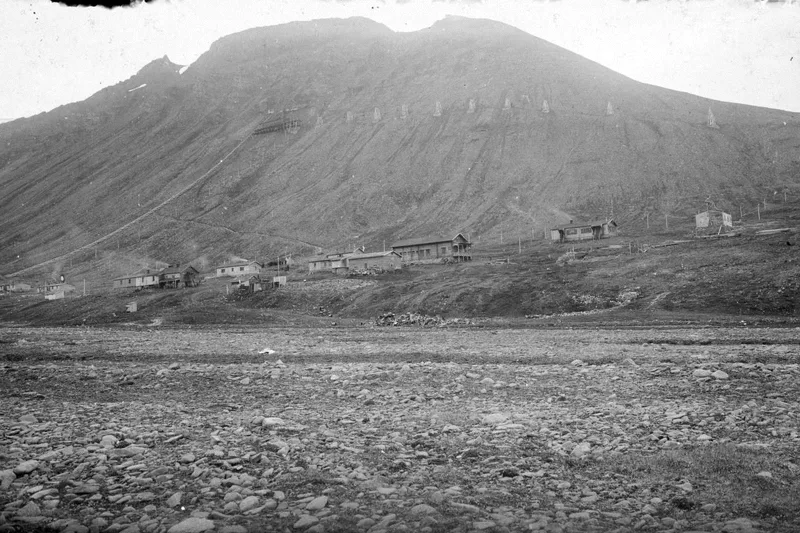
A coal dust explosion in Mine 1 at Longyearbyen in the night to 3 January 1920 killed 26 people. The jubilee history of 1991 from Store Norske (the mining company) records that the mine was destroyed by the explosion and by the fire that followed. According to that jubilee history, the mine lay at the outer end of the northern side of Longyeardalen, and Americans had started it in 1906 before Store Norske took it over. Another chapter of the jubilee history says that the company was struck in 1920 by its first big mine accident.
On the cause, Nathan Haskell Dole wrote in 1922 that the explosion was supposed to have come from naked lights used carelessly, which set the coal dust alight, or possibly from a lit match. He added that the cause would probably never be known. Dole wrote: "The explosion above noted was the only one that has ever occurred in a Spitsbergen mine." In his account, only approved safety lamps were used under the American regime, matches were forbidden to the miners below ground, and frequent tests for gas found none. He also wrote that in winter the air in the mine is very dry, so that the frost crystals which form in summer do not appear.
The jubilee history tells of the recovery in a photograph caption. Seven of the dead could be brought out only in the summer. Four were buried in Longyearbyen, and the others were sent to Norway. The caption shows Pastor Østenstad, described as the first priest at Longyearbyen, officiating at a burial on 31 July 1920. The jubilee history also says that the first priest had been sent by Det Norske Lutherske Indremisjonsselskap in June of that year and held his first service in the small hall of the workers' mess.
The mine did not reopen. The jubilee history states that production was stopped and never resumed, even though the board of the time held that nothing stood in the way of resuming work. It was judged more economical to concentrate the work in Mine 2, where the seam was thicker and the coal of full quality compared with Mine 1. A new Mine 1 was decided on at an extraordinary general meeting on 24 January 1938. It lay in the same mountain as the old one, but its entrance was further into Longyeardalen, at Sverdrupbyen. Regular production began in mid-October 1939.
Store norske leksikon, in the historical overview by Susan Barr, lists under 2020 that the great accident in Gruve 1 on 3 January 1920 is marked that year.