 Svalbard
Store Norske takes over
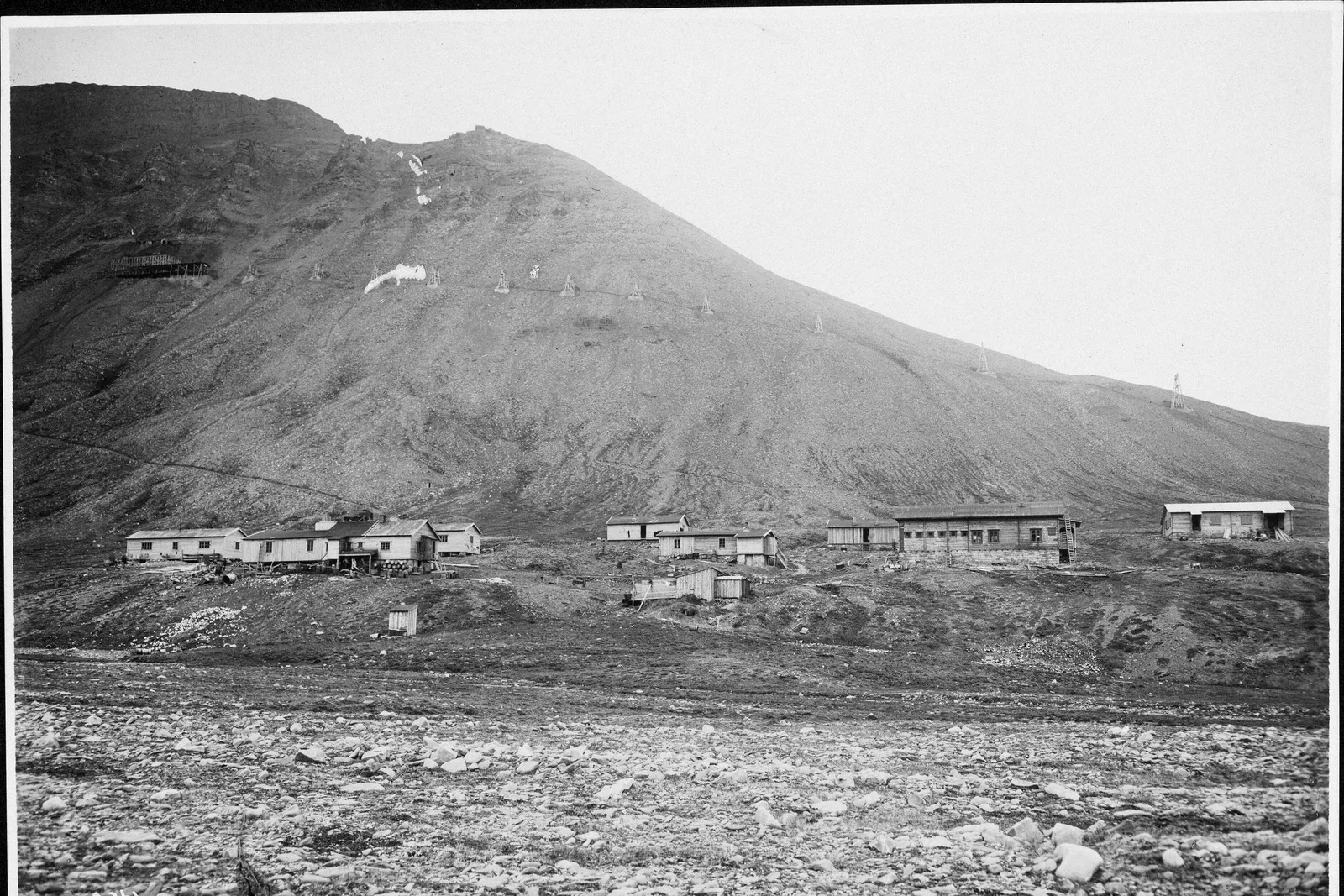
Store Norske Spitsbergen Kulkompani (SNSK) took over the Arctic Coal Company's properties on 1 September 1916, when the deed to the coal fields and mine works at Adventfjorden and Sassenfjorden was handed to the Norwegian minister Bryn, who paid the agreed cash sum on the spot. The Store norske leksikon says the company was founded in 1916 and took over all the American company's holdings at Adventfjorden and Sassenfjorden, together with other coal areas westward to Grønfjorden. Helge Ingstad writes that Trondhjem-Spitsbergen Kulkompani sold its fields on the west side of Adventfjorden to the Arctic Coal Co. of Boston in 1904, and that they were SNSK's central mining area when he wrote.
Store Norske's jubilee history of 1991 says that at the turn of 1915 and 1916 no share company had been formed and neither the price nor the financing was settled. After the talks with the Norwegians stalled, the American company contacted Swedish interests. A telegram of 20 February 1916 offered John Munro Longyear 3 million kroner, 1 million of it in cash. The Det Norske Spitsbergensyndikat was formally founded on 6 March. Longyear asked for 1.5 million in cash, and on 30 March the syndicate accepted: 1.5 million kroner cash and 2 million in ordinary shares, for all the properties of the American company and of Ayer and Longyear. Longyear confirmed the sale the next day. Nathan Haskell Dole, in his 1922 history America in Spitsbergen, gives the same terms and quotes the circular that Longyear signed as president, in which he wrote that he would sever his direct connection with the coal business in Spitsbergen.
Work began before the papers were signed. The jubilee history records that the syndicate sent a work crew to Adventfjorden in June, which irritated the Americans, and that the Norwegian flag replaced the American one on 15 July 1916. A couple of thousand tonnes of coal were produced, and the American stock-pile from 1915 was shipped out and sold for more than half a million kroner. The sellers signed the contract on 18 August, and Kielland-Torkildsen signed for the buyers on 1 September. Karl Bay had been hired as director from 1 April, and Kenneth Gilson became winter chief for 1916/17. The syndicate also bought Anker's fields at Grønfjorden for 150,000 kroner in cash and 660,000 in shares, and the other small fields there, which brought the total to more than 1,200 square kilometres. Dole counts over 500 square miles transferred.
The contract required a share company. Shares were subscribed from 1 to 8 November, and the preference capital of 5 million kroner was subscribed within weeks. The founding meeting was held at the Kristiania stock exchange on 30 November 1916, where the name Store Norske Spitsbergen Kulkompani A/S was approved and the lawyer Carl Lundh became the first chairman. In its first year the company made a surplus of about 1 million kroner and paid a 7 per cent dividend, despite a strike in 1917. Dole reports that the company had shipped over 18,000 tons by April 1917. The jubilee history adds that Longyear kept a large shareholding for many years.
The Swedish property followed in 1934. The jubilee history says Swedish interests formed a company in September 1916 and sent 150 men to Braganzavågen in Van Mijenfjorden in 1917, building the mine called Sveagruvan; about 400,000 tonnes of coal were shipped from Svea in the Swedish period. On 11 November 1933 the latest Swedish company contracted to sell its Spitsbergen property to SNSK for 1 million kroner. The Swedish Riksdag approved on 14 March 1934, and the Storting approved on 14 June 1934 an agreement with the state for a loan of the purchase sum. Ingstad likewise gives the price as 1,000,000 kroner. The purchase covered Indre Lågfjord (Svea), 689.6 square kilometres, and Indre Billefjord, 744 square kilometres. Before the war Svea was not opened for production: in 1937 the company decided to concentrate on Longyearbyen. A German submarine burned down the Svea plant in August 1944. The company rebuilt it after the war, and mining there stopped in the summer of 1949.
Svalbard Wire on Facebook, The week by email every Sunday