 Svalbard
Longyear City is founded
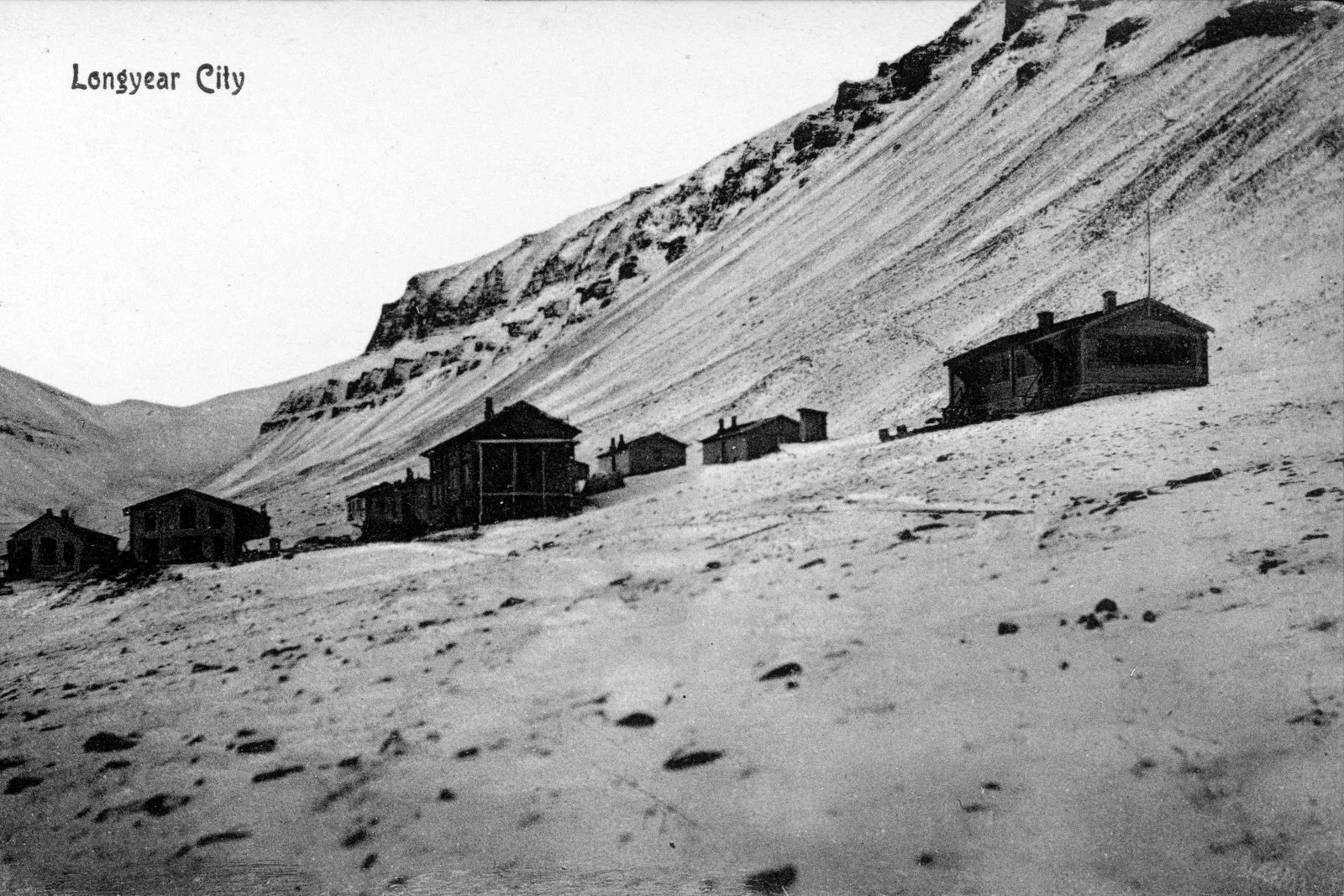
Longyearbyen, on the west side of Adventfjorden, was laid out in 1905 by the American company Arctic Coal Co., according to Store norske leksikon. The lexicon says the place was first called Longyear City, after the company's founder, John Munro Longyear, who lived from 1850 to 1922. The jubilee history of Store Norske (the state-owned mining company), Store norske 75 år, says he was born in Lansing, Michigan, and made his own fortune in Michigan in mining, timber, property and banking before he turned to Svalbard.
The ground had been prepared by a sale. Helge Ingstad writes in Landet med de kalde kyster that Trondhjem-Spitsbergen Kulkompani sold its fields on the west side of Adventfjorden to Arctic Coal Co. of Boston in 1904. The jubilee history adds that the formal transfer came only on 7 May 1906, because the buyers held a one-year option. It also says that in the summer of 1905 Jeldness and William D. Munroe, a mining engineer and relative of Longyear, went to Svalbard to look at the coalfields. An adit was cut on the west side of Adventdalen and a provisional tramway was laid down to the sea.
The sources do not agree on what the year 1905 marks. The lexicon's timeline of Svalbard history says regular coal mining began in 1905. The jubilee history, however, counts 1906 as the start of the American era, and Nathan Haskell Dole, in his book America in Spitsbergen, wrote that 1906 marked the actual start of the company's construction work. According to the jubilee history, Arctic Coal Company was founded in Boston on 6 February 1906 with a share capital of 100,000 dollars. That summer the rails were extended up to the adit, work on a quay began and a handful of houses went up. About 40 men stayed for the winter under Bert Mangham. Munroe died in a shipwreck off Holland on 1 February 1907, and the first coal was shipped on 1 July 1907.
The jubilee history says the plant at Adventfjorden was financed, planned and built by Americans, and that the name Longyear City reminded everyone who stood behind it. Longyear first saw Svalbard in 1901, as a tourist, and made seven trips between 1901 and 1914. The company prevented Norwegian attempts to set up a post office and a telegraph in the settlement, so those stayed at Finneset in Grønfjorden. The workers came from Norway, Sweden, Finland, England, Russia and Germany, but most were Norwegian, and Norwegian was the working language. The history therefore calls Longyear City a multinational community, neither purely American nor purely Norwegian. It also says that in a decade on Svalbard the company built a turnkey mining community from scratch, with mine, quay, cableway, power station and housing, and that between NOK 3 million and NOK 3.5 million was invested. Sources from 1910 show the cluster of houses in Longyeardalen already carried the name Longyear City.
The American era ended with a wind-down. The jubilee history says the company laid off almost all its staff in the autumn of 1915, and by the end of that year it had no assets left in Norway and the plant lay dormant. Dole records that the property was then sold to a Norwegian syndicate represented by Centralbanken for Norge, with the deed delivered on 1 September 1916 and terms of NOK 1.5 million in cash and NOK 2 million in common stock. The lexicon says Store Norske Spitsbergen Kulkompani, founded in 1916, took over all Arctic Coal Company property at Adventfjorden and Sassenfjorden. The jubilee history holds that the company's work became the basis for Store Norske and drove the coal mining that followed after the war. It adds that Longyear kept a large block of shares for many years after the sale, and that the miners went on calling the settlement Longyear City for many years after the Norwegian takeover.
Svalbard Wire on Facebook, The week by email every Sunday