 Svalbard
Sea areas around Svalbard put forward for protection
Published . Edited : wording only, no fact changed.
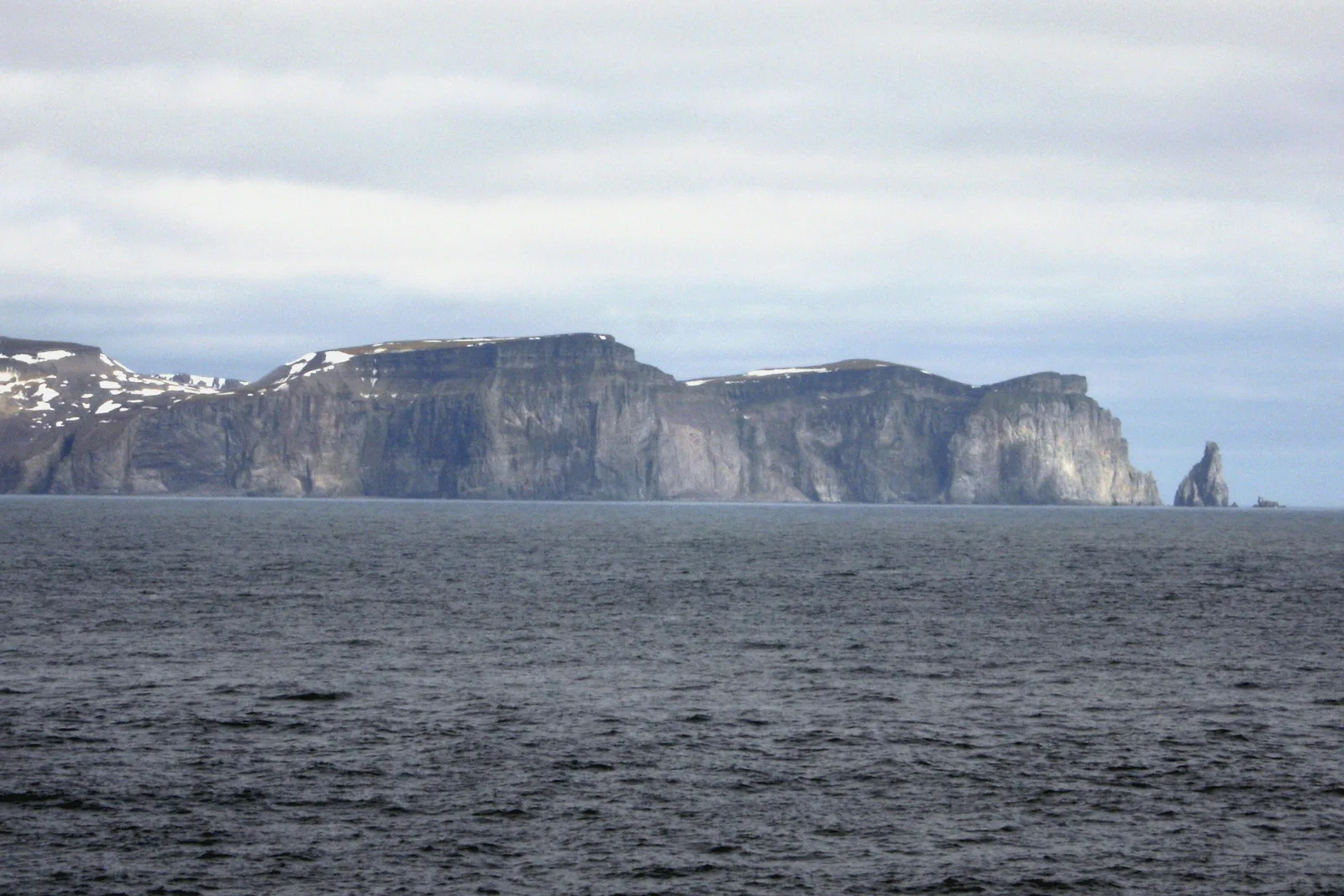
Storfjorden, Woodfjorden and Wijdefjorden are among the waters the government would be asked to consider and prioritise in a new marine protection plan. Four parties in the Storting (the Norwegian parliament) agreed on the request on Wednesday 25 November.
Until the plan is finished, no petroleum activity is to be opened along the ice edge or around Bjørnøya (Bear Island), the southernmost part of Svalbard, under the agreement.
The request is point 36 of their agreement on the 2027 state budget. The parties are the Labour Party, the Centre Party, the Socialist Left Party and the Red Party. They do not have a majority in the Storting without the Green Party, which did not join the agreement.
The waters to consider are in the Arctic Ocean and around Svalbard. The list also has important areas linked to the ice edge and areas in the 100 km belt off Bjørnøya.
The agreement describes the Arctic Ocean and Svalbard waters as already recognised under the international convention on biological diversity. They count as conserved by other measures than formal protection.
The plan is to include areas beyond 12 nautical miles. The process to protect the first areas is to start no later than the government's 2028 budget. The aim is to have the plan ready by the middle of 2029.
Once such a process has been announced, permits for petroleum or other industry would be refused if they conflicted with the purpose of the protection. The exception is cases that meet the strict conditions of the marine protection act.
The agreement sets aside NOK 3 million in 2027 to develop marine protection plans.
Limits on petroleum already exist at Bjørnøya and the ice edge. The government's sea management plan of 2024 bars new petroleum activity within 100 km of Bjørnøya. Parts of that belt in areas set in advance for licence awards are exempt.
The 2024 plan also bars new activity where there is sea ice on more than 15% of the days in April, counted over the years 1993 to 2022. Its limits apply until a later update changes them. The new agreement refers to them.
Norway had conserved 13.3% of its sea areas, the Ministry of Climate and Environment said on 27 October. About 4% was protected and 9.3% was conserved by other measures.
The starting point for the other measures was areas with fishing rules, such as bans on bottom trawling, the Norwegian Environment Agency said on 28 October. Those areas also overlap with particularly valuable and vulnerable areas. Areas where petroleum activity is not to start under the sea management plans were also part of the starting point.
Tuva Moflag of the Labour Party, who chairs the Storting's finance committee, said that the agreed budget took better care of nature. The Socialist Left Party said that the areas around Bjørnøya and the ice edge would be protected against petroleum activity.
Hildegunn T. Blindheim, the managing director of Offshore Norge, said that the parties set an unfortunate precedent by taking single areas out of the formal process of the sea management plans. Offshore Norge, the organisation of companies on the Norwegian shelf, expected the new plan to follow the limits the Storting had already set.
Karoline Andaur, the secretary general of the World Wide Fund for Nature in Norway, spoke for five environmental organisations on Wednesday. If the Labour Party was willing to lose the red-green majority by refusing to limit oil exploration in the Arctic, it showed much of how strongly oil interests still steered Norwegian politics, Andaur said.
Oda Indgaard, the Green Party's negotiator, told Energi og Klima that the party wanted real results for an ambitious climate policy.
Henrik Asheim, the deputy leader of the Conservative Party, sits on the Storting's finance committee. Asheim said that the parties presented an agreement that did not have a majority in the Storting.
The Progress Party is not part of the agreement. Kristoffer Sivertsen, a member of the Storting for the party, told the news agency NTB on 22 September, before the talks, that it was complete madness to stop exploration in the Barents Sea. The party's view was that Norway must open the northern Barents Sea as soon as possible.
The finance committee is to deliver its recommendation on the budget on Monday 30 November. The Storting is to take up the budget on Monday 7 December.
Written by the editor with the Wire's software, from the sources listed below, and checked against them before publication. The editor answers for every story. How the Wire is made.
Sources
Coverage: Energi og Klima, Offshore Norge, WWF Norway, NTB, in ABC Nyheter
The Labour Party
Budget agreement on the state budget for 2027, with the points the parties agreed on (PDF)
Energi og Klima, Press, 25 November 2026
Green Party refuses to support the budget, demands climate cuts next year
The Government, 5 April 2024
Integrated management plans for the Norwegian sea areas, white paper 21 (2023-2024), chapter 10
Ministry of Climate and Environment, 27 October 2026
The Norwegian Environment Agency, 28 October 2026
The Socialist Left Party, 25 November 2026
Offshore Norge, Press
WWF Norway, Press, 25 November 2026
Joint statement from the environmental movement on the state budget
NTB, in ABC Nyheter, Press, 22 September 2026
The Green Party and the Socialist Left Party demand a halt to exploration in the Barents Sea
The Storting
The Conservative Party, 25 November 2026
- Politicians dispute WWF film on oil around Svalbard (12 November 2026)
- Student debt relief may be extended to Svalbard (25 November 2026)
- Svalbard may get free half-day after-school places (25 November 2026)