 Svalbard
Method first tested on Svalbard cable hears bowheads
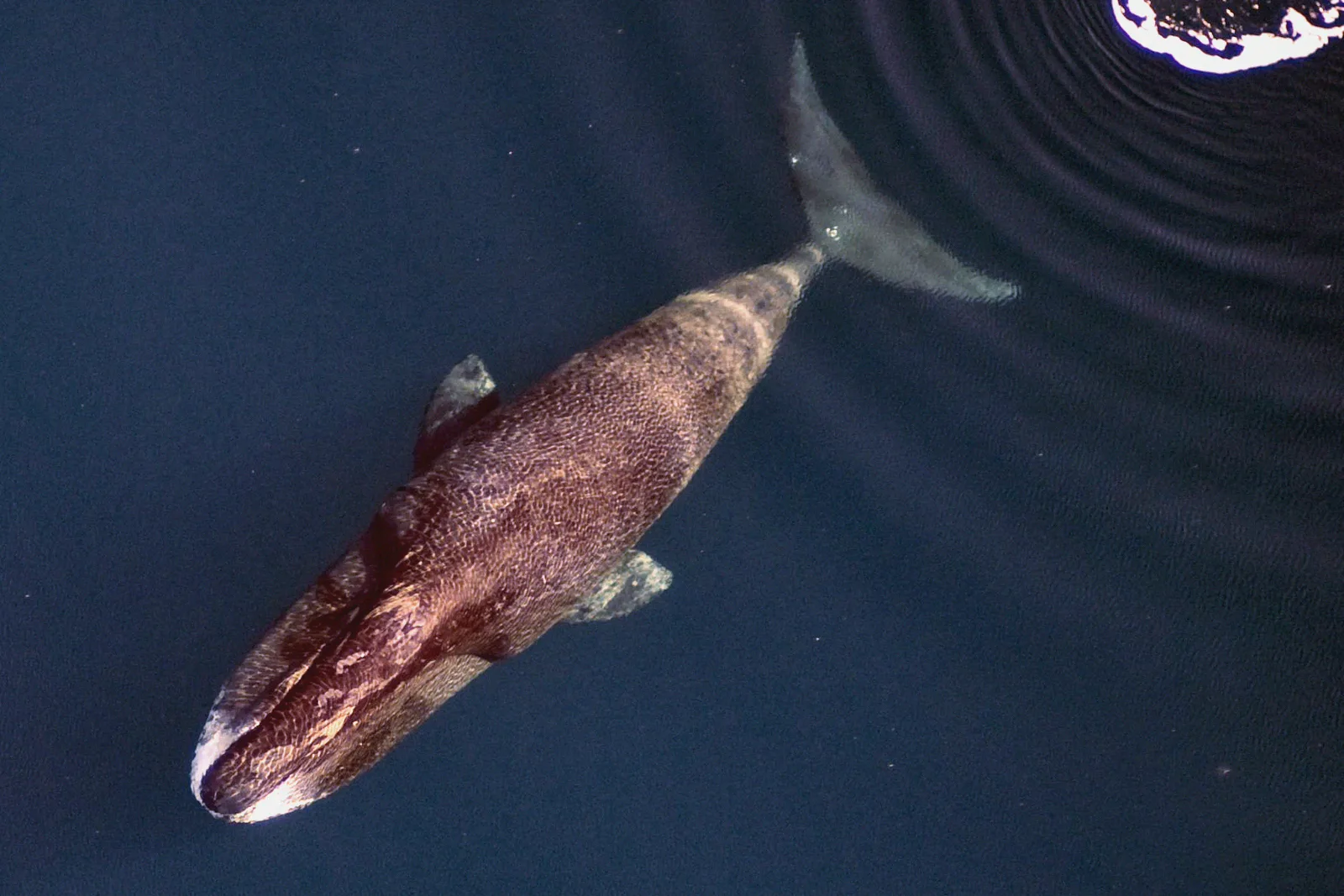
A way of listening to whales through seabed telecommunication cables, first tested on a line that runs from Longyearbyen through Isfjorden to the open ocean, has picked up bowhead whale calls for the first time. Cornell University reported the detections, made off Alaska, on 10 November.
The method is called distributed acoustic sensing (DAS). It sends laser pulses through a fibre-optic cable and measures the tiny changes that passing sound waves cause in it. A long cable on the seabed becomes a dense row of listening points.
The method was first used on wildlife in Svalbard. In a 2022 paper in Frontiers in Marine Science, Léa Bouffaut and colleagues turned 120 km of the cable from Longyearbyen towards Ny-Ålesund into a listening array. It had a sensing point about every 4 m. They recorded blue and fin whales and estimated the position of a calling whale in three dimensions. The paper describes it as "the first case of wildlife monitoring using distributed acoustic sensing".
A second 2022 study, in Scientific Reports, used the same Svalbard cable to detect whales, storms, ships and earthquakes. It streamed 250 terabytes of data from Svalbard to mid-Norway over 44 days through the Uninett research network.
Bouffaut, a researcher at Cornell's K. Lisa Yang Center for Conservation Bioacoustics, took the method to Utqiaġvik on Alaska's North Slope in spring 2026. She worked there with the Barrow Whaling Captains Association and the North Slope Borough Department of Wildlife Management, on a cable owned by Quintillion.
Blue and fin whales call below 100 hertz. Bowhead whales call at about 150 to 300 hertz and less loudly, which makes them harder to detect. After weeks of analysing terabytes of recordings, she found the first bowhead calls in DAS data.
"Being able to detect bowhead whales on a telecommunication cable is the proof of concept we need to show that DAS can be used to monitor all baleen whales," Bouffaut said.
She also published a review of the method in Methods in Ecology and Evolution on 10 November. Telecommunication and energy companies already watch their offshore cables for faults and threats. Bouffaut said the same data could also be used to protect wildlife. The method is meant to add to underwater microphones, not to replace them.
Coverage: Cornell University