 Svalbard
Longyearbyen energy plant nearly halves emissions
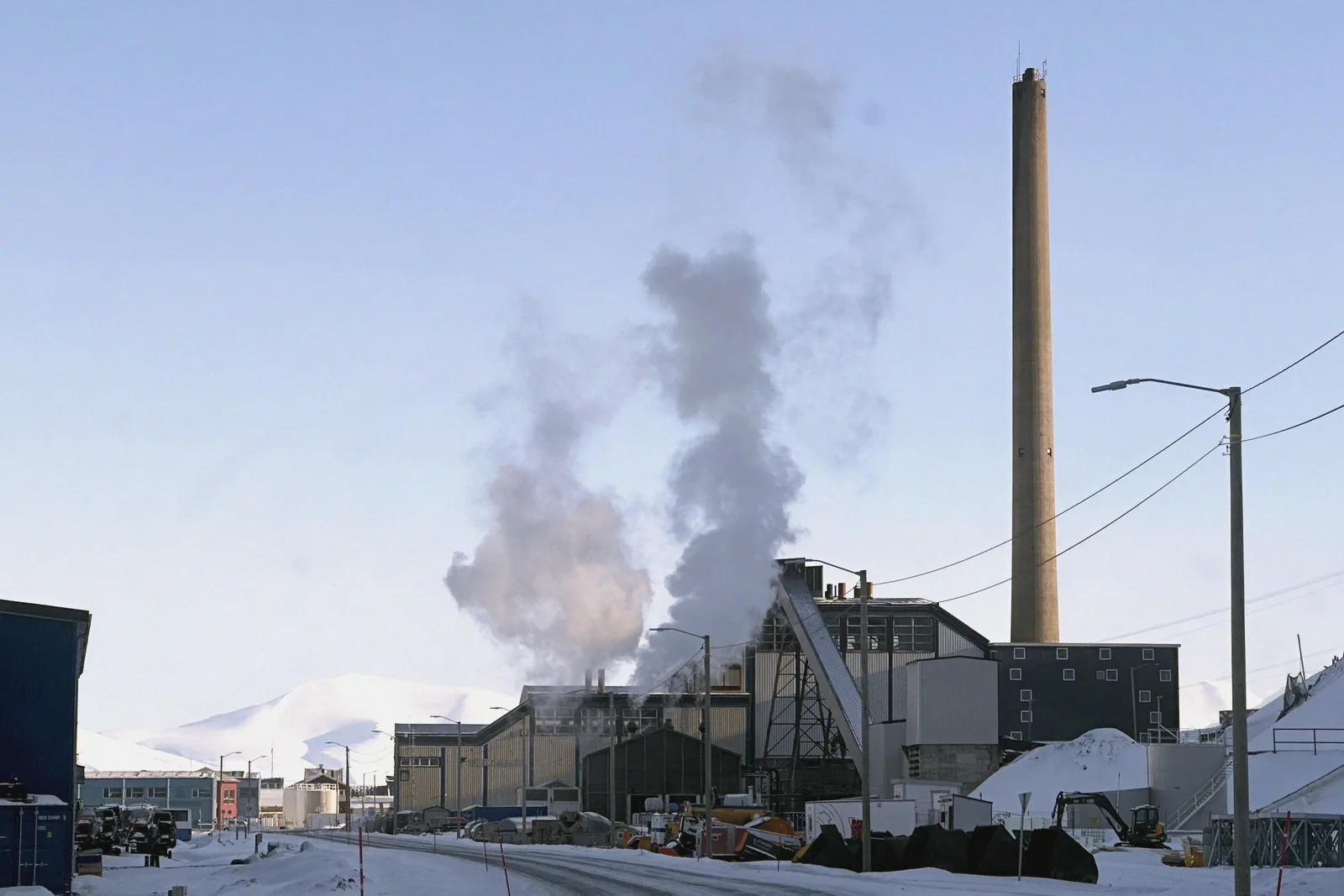
Emissions of carbon dioxide (CO2) from Longyearbyen's energy plant have fallen by 45% in the three years since it stopped burning coal, NRK reported on Tuesday 10 November.
The coal-fired power station closed in October 2023. Since then Svalbard Energi, the town's energy company, has made electricity in a diesel power plant and heat in boilers fired with the same fuel. Heat recovered from the generators also goes into the district heating, the company said on its website.
Torstein Sole-Gärtner, managing director of Svalbard Energi, and Rune Midtgaard, chief executive of Store Norske, both told NRK the cut has not been talked about enough. Store Norske is the state-owned company that took over Svalbard Energi in January 2026.
Store Norske gave figures in a submission to the local council (Longyearbyen lokalstyre) dated 8 August 2025. The council's climate account, built on 2021 figures with the coal plant running, calculated direct emissions from the energy supply at more than 70,000 tonnes. For 2024, the first full year on diesel, they were calculated at about 40,000 tonnes, Store Norske wrote.
Direct emissions from Longyearbyen's energy supply fell from more than 70,000 tonnes on coal to about 40,000 on diesel
From fossil to fossil
People asked why the town would go from fossil to fossil, NRK reported. One reason was that the diesel has to be shipped in, which is a new source of emissions. Sole-Gärtner said shipping is counted in the figures and that diesel is only the first step.
Before the switch, in September 2023, the local council said diesel would give a 50% cut in greenhouse gas emissions. That figure counted the production of the diesel, its freight and the energy production at the plant, the council said.
Terje Aunevik of the Liberal Party, leader of the local council, told NRK that security of supply was his priority. Diesel is proven technology, he said. He said he would like more ambition and that diesel makes it easier to add renewable energy. He also said the cut looks large partly because emissions were so high before.
Wind, sun and seawater
The options for Svalbard are wind, solar power and seawater heat pumps, NRK reported. More tests are needed to choose between them.
Wind is preferred for economic reasons, but measurements must show whether it suits the area near Longyearbyen, Svalbard Energi said on its website. If it does not, the answer is solar panels on the ground. Models show high values for icing in some of the places considered for wind turbines. The company has had an area on the mountain Breinosa set aside for a temporary measuring mast.
Store Norske's board sees a need for wind measurements, a computer model of the town's energy supply, called a digital twin, and test plants for a seawater heat pump and a solar park. The cost of all of it was estimated at NOK 44 million in 2026. The Ministry of Trade, Industry and Fisheries wrote this in its budget proposal for 2027.
The Storting (the Norwegian parliament) granted NOK 5 million in 2026, and the board put wind measurement first. For 2027 the ministry proposes NOK 6.2 million. Of that, NOK 5.2 million is for wind measurement and NOK 1 million for a preliminary project to test seawater heat pump technology.
Store Norske said more than 2,500 solar panels are mounted on commercial buildings in Longyearbyen. It expects them to give about 570,000 kWh a year and to save about 145,000 litres of diesel.
Foundations on permafrost are difficult and concrete is expensive, NRK reported. The polar night lasts three months, but the midnight sun lasts as long, the companies said.
Colder temperatures and more reflection from snow raise the output of the panels, the consultancy Norconsult wrote in October 2023 in a study of solar and wind power for Longyearbyen. It added that there is great uncertainty about icing on fixed equipment on the mountain tops around the town.
Aunevik pointed to the solar park of the satellite company KSAT on the mountain and to the biogas plant of the airport operator Avinor. Avinor opened the plant at Svalbard Airport on 12 January 2026, to give the airport power and heat from liquid biogas. The opening began a trial period of about one year before regular operation, Avinor said.
The 2030 goal
Sole-Gärtner confirmed to NRK that the goal of going from coal to zero by 2030 will not be met. Midtgaard said 100% renewable energy was never realistic, because Svalbard has no neighbours to rely on and needs a secure supply. Aunevik agreed.
The local council's community plan had its own goal for 2030. CO2 emissions from energy production in Longyearbyen were to be cut by at least 80%, compared with 2018.
When the council revised the plan in 2025, its draft proposed to remove the goals for CO2 cuts in energy production. The reason given was the changed economic and geopolitical situation, Store Norske wrote in its submission. The council adopted the revised plan on 17 September 2025.
Store Norske recommended a future energy system with about 50% renewable energy. That would mean emissions of about 20,000 tonnes, more than 70% below the level with coal power. The renewable choices it recommends are uncertain, Store Norske wrote, but this should be able to serve as a sensible goal, built on knowledge, for the end of the plan period.
What residents say
Karina Standal, research professor at Cicero, the Center for International Climate Research, studies the energy transition in Longyearbyen. She told NRK the cut is an important step for a town with high emissions per person.
Her interviews show high expectations for renewable energy, she said. Diesel is a necessary bridge, but the town feels no excitement about it and has no history with it. People want openness and a say in the process, she said.
Cicero described the study in its magazine on 3 February 2025. Standal and her colleague Tom Erik Julsrud interviewed residents and then sent out a written survey. People are divided in their view of the transition, Julsrud said there.
Most of those asked were critical of the use of diesel, the magazine wrote. Many are worried about security of supply and price, Julsrud said. Several want coal back, and those most positive to the transition are those who have lived on Svalbard for the shortest time, the magazine wrote.
New energy rules
The Ministry of Energy sent a proposal to regulate the supply of electricity and heat in Longyearbyen out for consultation on 25 March 2026. The Energy Act does not apply on Svalbard. The earlier licences have run out and no rules made for the energy sector apply to the supply, the ministry wrote.
The proposal has rules on licences, operation, delivery quality, rationing, tariffs, security and preparedness. It sets a reserve store of fuel for at least three months, with six months as the alternative, and the ministry asked for views on the length.
The ministry will decide after the consultation when the rules take effect. One starting point is 1 January 2027, with some provisions a year later, it wrote. The consultation closed on 31 July with 22 responses.
The Governor of Svalbard (Sysselmesteren) wrote that it can seem that ambitions for the move to renewable energy are to some degree lower in the current period. There can be natural reasons for this, the Governor wrote, but it is important to keep the long-term goal. The new rules should help and stimulate the move to fossil-free renewable energy, the Governor wrote.
The Svalbard business association (Svalbard Næringsforening) supports letting private companies and others produce their own energy. At the same time the rules must do more to stimulate renewable energy sources, it wrote. It asked the ministry for open meetings in Longyearbyen before the rules are set.
The destination company Visit Svalbard answered for the tourism council (Svalbard Reiselivsråd). It is positive that the state is taking over the energy supply and shows will to act quickly and invest enough, it wrote. At the same time it called it a considerable weakness that the proposal was not discussed enough with local parties before the consultation. It called the lack of requirements for security of supply and quality a weakness, and asked the ministry to withdraw the proposal and rework it.
Store Norske and Svalbard Energi wrote in a joint response that the rules should give incentives for more production of renewable energy, without opening for arbitrage that follows from energy support.
The local council wrote that it is positive that the supply is more clearly regulated. At the same time it wants costs kept at an acceptable level for households, businesses and public services. It is also positive that the rules make room for customers who produce their own energy, the council wrote.
The proposal is neutral on technology, Energy Minister Terje Aasland wrote on 13 April 2026 in an answer to a written question in the Storting about energy on Svalbard. The ministry takes no position on which solutions are studied, he wrote.
Coverage: NRK