 Svalbard
Hornsund station plans to move its fuel tanks
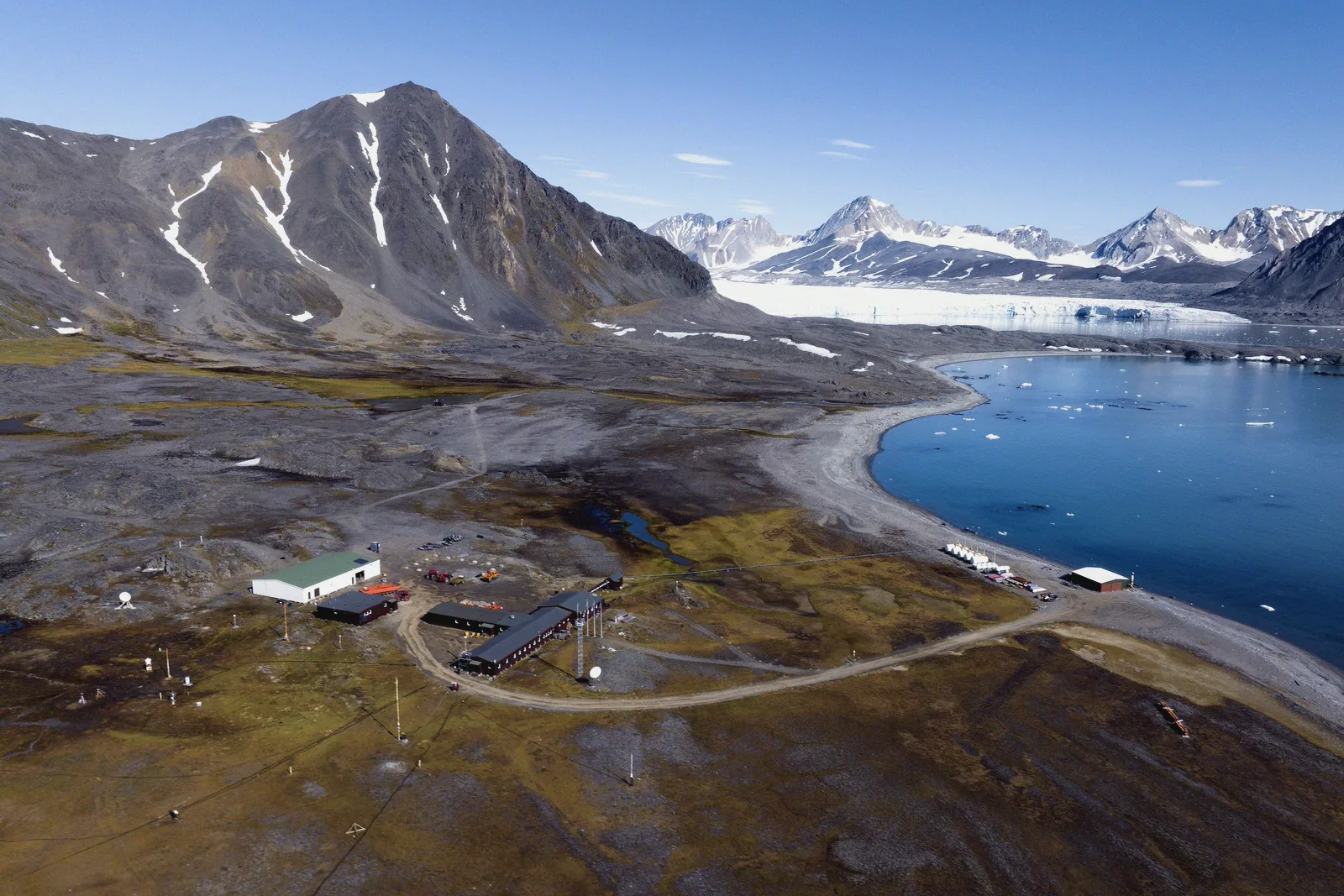
The Polish Polar Station Hornsund is to move its fuel tanks away from an eroding shore, the Institute of Geophysics of the Polish Academy of Sciences said on Thursday 22 October. The station is in the south of Spitsbergen, the largest island of Svalbard.
The tanks hold 125 m³ of diesel and stood about 8 m from the shore, the institute said in a notice on its project to extend and modernise the station. They were more than 20 m from it when they were installed more than 20 years ago, Mateusz Moskalik told the Polish Press Agency. Moskalik is head of the station and of the institute's Department of Polar and Marine Research. The science news site Nauka w Polsce published the interview on Thursday 5 November.
The project runs from 2026 to 2030 and is worth more than PLN 17.2 million (about EUR 3.9 million), according to the institute. Almost PLN 15.2 million is a grant from Poland's Ministry of Science and Higher Education, under an agreement signed on Monday 6 July.
A new technical and service building is planned in place of a storage building by the shore. It is to cover its own energy needs and to hold laboratories and rooms for teaching and conferences, the institute said.
Moskalik said that the storage building, put up in the 1980s some tens of metres from the shore, had been taken down in 2026. It had stood on an artificially reinforced headland, and the reinforcements the station built had not proved effective. It was the one building near the shore. The station's living quarters, laboratories, storage and workshops were more than 200 m from the shore.
The shore retreated by 1 m a year on average, Moskalik said, and strong storms in recent years had cut it back by 2 to 3 m at once. He said the retreat was mainly a result of climate change. Winds were stronger than before, with bigger waves and more frequent storms. A layer of snow and ice that once formed along the shore in autumn and gave it some protection formed later, sometimes in the middle of winter.
The station planned to finish the design documents later in 2026 and then invite bids for the work, Moskalik said. It would like to start some stages in 2027, which needed planning ahead. The work is to end by 2030, so that the station is ready for the more intensive research of the fifth International Polar Year, in 2032 and 2033.
The main living building was in good condition for further years of use, he said.
The station was built in 1957 and has been staffed all year since 1978.
Coverage: Nauka w Polsce, TVP World