 Svalbard
New studies on Svalbard history mark treaty centenary
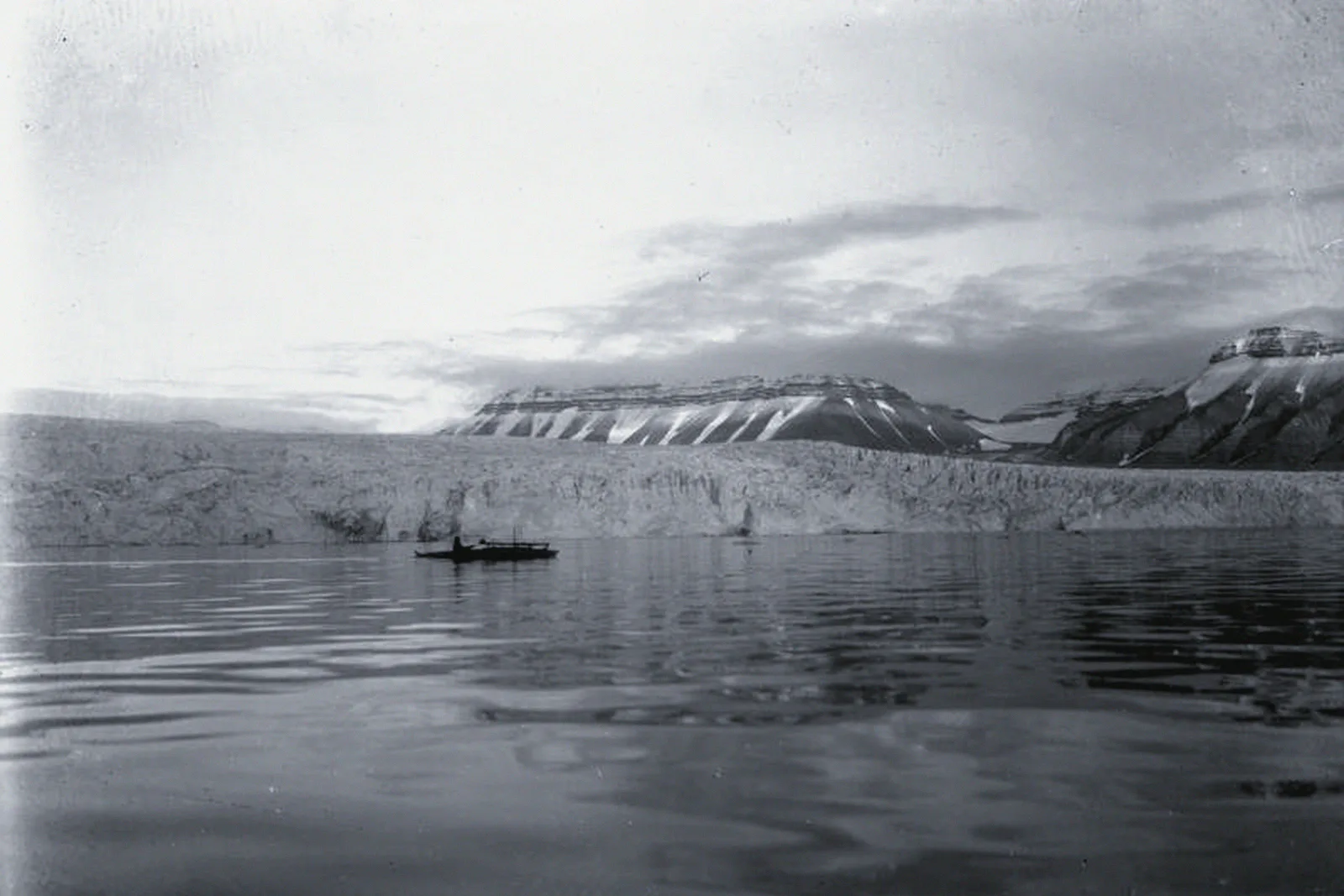
A journal published by UiT The Arctic University of Norway released seven new studies on Svalbard's history, politics and art on Friday 6 November, to mark 100 years since the Svalbard Treaty came into force.
The collection, Svalbard Studies III, appears in the peer-reviewed journal Poljarnyj vestnik and is free to read. Its editors, Leonid S. Chekin and Andrei Rogatchevski, wrote that it grew partly out of a workshop at Isfjord Radio and in Longyearbyen in June 2025. They arranged the studies in the order of the years they cover.
Store Norske and the state
The first, by Thor Bjørn Arlov of Svalbard Museum, follows Store Norske, the coal company, from 1916 to 1976. Arlov wrote that the company changed "from being instrumental in shaping Norwegian policy towards Svalbard to becoming itself an instrument for state policy". The state took effective control in 1933, while the company stayed private.
The shipowner Hilmar Reksten, a major shareholder and former chairman, later sold his shares to the state "at a 700% premium", Arlov wrote. The other shareholders then asked for the same offer. In 1976 the Storting (the Norwegian parliament) granted NOK 67 million to buy out all of them except 1%.
Barentsburg in the 1930s
Rogatchevski and Richard D. Davies of the University of Leeds wrote about reporters who visited Barentsburg in the 1930s. Lazar Brontman of the Soviet newspaper Pravda wrote in August 1935 that "Barentsburg's coal conveyor belts are endless". Arne Skouen of the Norwegian newspaper Dagbladet found the Soviet town "much more impressive" than Longyearbyen.
Brontman's private diary, cited in the study, gave a different account. His entry of 26 July 1935 says that at least 12 rapes and 194 abortions took place in Barentsburg during the 1934 to 1935 overwintering. Men there outnumbered women by about six to one at the time, the study says, citing Brontman's writings. In a note two days later, he recorded a denial by Stavnitser, whose officially approved memoirs the study also uses: "all this talk about rapes is nonsense".
None of this reached Pravda, which told readers that Barentsburg lived "like a tight-knit, friendly family". The study also cites minutes from 1936 that record a figure of 83 abortions being cut from a newspaper article by the Barentsburg doctor.
Ernst Herrmann's Svalbard film
Daniel Dumas of the Leibniz Institute for Regional Geography wrote about Ernst Herrmann, a German geographer who came to Svalbard in 1937. Dumas called him the first explorer to make a colour film of the Arctic. Herrmann made a 12-minute documentary, Svalbard, and took over 1,000 colour photographs. He was not a member of the Nazi Party, Dumas wrote, but his work shows swastika flags and place names given in honour of Nazi officials.
The Hopen crash of 1978
Haakon Unhammer Kvaale of Svalbard Museum and UiT used government archives to tell the story of a Soviet Tu-16 maritime patrol plane that crashed on Hopen in August 1978. The Governor of Svalbard reached the wreck first. The Soviet ambassador then demanded it and said that naval infantry on a Soviet cruiser offshore could go ashore and take it.
Norway gave the accident investigators 42 hours on the island before 50 unarmed Soviet men took the wreckage, but kept the flight data recorder and had it decoded in Norway. Kvaale found that the government later made the investigators withdraw a statement that they had worked under time pressure from the government.
Interpreters in the Cold War
Chekin studied how the Governor's office and the Soviet settlements talked to each other. From the 1950s until 1978, a Soviet interpreter was the only option at most meetings between the Soviet consul and the Governor, and "the Norwegians were at an obvious disadvantage", Chekin wrote. Meetings also relied on stand-in interpreters, once a cook, and on "the sharing of alcoholic beverages".
Arctic warming on film
Henrik Gustafsson of UiT wrote about Not Planet Earth, a 2021 film of eleven shots that the artist Susan Schuppli made on a voyage around Spitsbergen. Gustafsson wrote that the film uses the camera as a "thermographic or seismographic tool", and turns glitches in the recordings into "environmental stress signals" of a warming Arctic.
Svalbard in Russian media
The last study, by Anna Obukhova, an independent researcher, reads Russian federal media from 2010 to 2025. Obukhova found that from 2014 the coverage of cooperation and resources gave way to "continuous dissatisfaction with restrictions on physical access to the archipelago", linked to sanctions and Norway's Svalbard policy.
The first collection in the series appeared in the journal Nordlit in 2020, and the second, on coal mining, in Poljarnyj vestnik in 2022.