 Svalbard
Bishop to begin Svalbard visitation, first since 2015
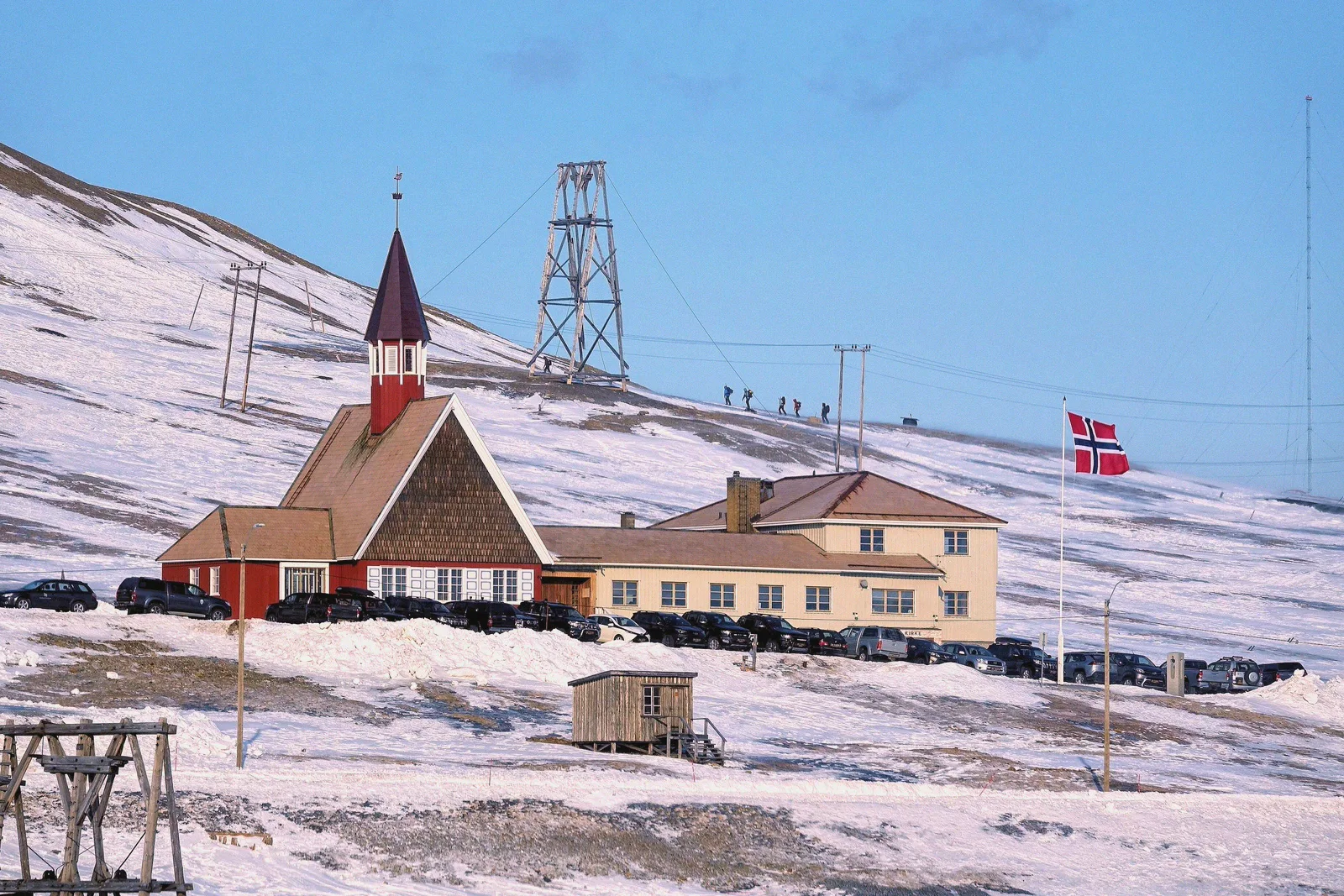
Bishop Stig Lægdene of the Diocese of Nord-Hålogaland will begin an official visitation of Svalbard Church and Longyearbyen on Tuesday 10 November, the Church of Norway said. The visitation runs to Sunday 15 November and is the parish's first since September 2015.
Before the visit, the parish wrote the bishop a report on the church and the town since 2015. In it, the parish says Longyearbyen is a family society that many experience as a good place to live. At the same time, it says, the town is experienced as "a class-divided society" in housing, pay and other working conditions, with divisions that "cut across each other".
Under the church's rules, the bishop visits each parish "as a rule at least every eighth year" and presents a visitation talk to the congregation. Lægdene was appointed bishop in September 2025. The theme of the week is "A special mission in the North: being church for all in the Arctic".
The programme
On Wednesday 11 November the bishop meets the Governor of Svalbard (Sysselmesteren), Lars Fause, Store Norske's director Rune Midtgård and Visit Svalbard's managing director Ronny Brunvoll. On Thursday he meets UNIS director Jøran Moen, then the administration and political leadership of the local council (Longyearbyen lokalstyre), including council leader Terje Aunevik. He also visits the upper secondary school and the Youth Council.
On Friday 13 November he meets the management of Longyearbyen hospital. On Saturday he visits Svalbard Folkehøgskole, the folk high school. He also meets the church staff, the church council, confirmands, the scouts and the children's choir Polargospel.
Four events are open to all. The first is an evening service at 19:00 Svalbard time on Tuesday, with church coffee and waffles afterwards. On Friday an open meeting from 19:00 to 21:00 in the church's fireplace lounge asks: "Only robust people in a robust family society?" On Sunday the visitation service starts at 11:00. At 14:00 the bishop gives his visitation talk over church coffee, and "Hymns in the Polar Night" runs from 18:00 to 19:30.
The meeting's phrase is the government's. Its 2024 white paper on Svalbard calls Longyearbyen a "robust family society" whose welfare services fit residents who live there mainly because of work. The white paper says the town is not meant to be a place to live a whole life.
Population and housing
The parish report, signed by parish priest Siv S. Limstrand on 10 October, covers 2015 to 2026. It puts Longyearbyen at 2,480 residents in the first half of 2026, from 66 nations, with 416 children and young people under 20. Half of the residents of Longyearbyen and Ny-Ålesund are between 20 and 44 years old, and on average 20 children are born a year.
The parish says 45% of residents are not Norwegian. Statistics Norway corrected that same figure from 45% to 36% on 4 March 2026, a day after publishing it. Its corrected figure is the share of foreign citizens in Longyearbyen and Ny-Ålesund, where 2,512 people lived on 1 January 2026.
The parish says a fifth of the population changes in a year. Median residence for several nationalities is two to four years, it says, citing Statistics Norway's 2022 figures; for Thai residents it is over nine years and for Russians 5.5.
Housing is "demanding", the parish says. The number of homes is limited by political decision, and most belong to Statsbygg or Store Norske after the local council transferred its homes. Avalanches and fires have reduced the stock, many homes are old, and maintenance lags far behind. Short-term letting and Airbnb press the rental market further.
Several laws do not apply on Svalbard, among them the Social Services Act, the parish says. Anyone who needs social services has to move back to their mainland municipality. So the town has no nursing homes, long-term ill people who need extensive care, asylum seekers, beggars or visible drug users. The local council is not to run measures that even out social differences.
Children's right to adapted teaching at the school has been unclear compared with mainland schools, the parish says, and this uncertainty led several families to move to the mainland.
The town is also marked by people with resources and a high level of activity, with many volunteers, the parish says. Many look after each other, yet not everyone finds their place. Several residents feel lonely, especially parents at home with small children, people on sick leave, students and those who came alone. It can be hard to be the one left out in a community with so many resources, the parish says. The dark season can deepen the loneliness, and easy access to alcohol can become a problem for some.
Health
The Health and Care Services Act does not apply on Svalbard. Some municipal health services exist, such as physiotherapy, dentistry, the health station, school health and child welfare. The parish says the town has changed a lot in recent years without a matching change in health services. A low-threshold mental health service is seen as at least as important as the existing municipal services, it says.
In 2024 it was reported that over the previous 14 months the suicide rate in Longyearbyen had been ten times the mainland rate, and that three people had died by suicide, the parish says. Mental health is still strongly taboo. The doctors at the hospital believe many cases go unrecorded, they wrote in a comment on the 2024 Svalbard white paper, according to the parish.
Changes since 2015
The report lists the events of the decade. An avalanche from Sukkertoppen on 19 December 2015 killed two people and took 11 houses. The parish says it marked a turning point in how safe Longyearbyen feels, and that it is regarded as driven by climate change. Slush avalanches came down on both sides of the cemetery on 14 and 15 October 2016. An avalanche on 21 February 2017 took several houses; no lives were lost.
In March 2020 the end of mining at Svea was marked. During the pandemic, services moved outdoors and to other venues. After Russia's full-scale invasion of Ukraine in February 2022, more Ukrainians moved from Barentsburg to Longyearbyen.
A fire in a housing complex on 12 September 2022 caused no serious physical damage but left many people homeless, and many turned out to have no insurance. A fire in a residential area on 4 February 2024 hurt no one but also left many homeless and, the parish says, insecure for a long time.
The coal power plant closed in October 2023. Power and heat moved to diesel reserve plants and generators, meant as a temporary solution while renewable energy is phased in. Store Norske took over the energy supply from the local council.
Mine 7, the last Norwegian-run coal mine, had its last working day on 30 June 2025. Coal prices rose because of the war in Ukraine, and Store Norske mined for two extra years. That gave the town more time to adjust, but such a chapter does not close without feelings and reactions, the parish says. The closing of the mine's interior was completed on 4 May 2026. The parish notes tension over the loss of industrial jobs, skills and infrastructure, and over families with children moving away.
In September 2025 residents were warned not to drink tap water because of high levels of manganese, nickel and sulphate. The parish links this to a warmer climate: as the permafrost thaws, groundwater finds new ways into the winter drinking-water source, Isdammen. The church installed a reverse-osmosis plant to clean drinking water for visitors.
Graves
After the slush avalanches of October 2016, the Governor at the time, the local council and the church agreed that no more urns would be placed in the churchyard, the parish says. A search began for a new burial ground in an area safe from avalanches. The local council chose a site immediately north of the church in June 2022. A draft regulation was sent for consultation in 2024 and is still with the Ministry of Justice and Public Security. The long unresolved situation means residents' right to an urn grave is not being met, the parish says, and "this must now be solved after 10 years".
The church
Svalbard Church is the world's northernmost church, the parish says. It is open around the clock and serves everyone on the archipelago whatever their nationality or church membership. It counts 35,000 to 40,000 visitors a year, of whom 6,000 attend services and events and about 4,000 take part in activities and choir rehearsals.
The church has three permanent staff, paid from chapter 1 of the Svalbard budget. With no joint church council, the parish priest also carries the churchwarden's duties. A locum covered the post from August 2024 to April 2025.
The priest works on average "a good extra week a month", at times considerably more, the parish says, and the deacon also works considerable overtime. Courses, updates and weapons training are cut back. The parish puts its staff shortfall at a 40 to 50% position, "to estimate low".
The grant fell behind from 2022 to 2025, the parish says. After support from members of the Storting, the local council, the local Labour Party branch, Visit Svalbard and others, the 2026 grant is "where it should be".
Flights now go mainly direct between Longyearbyen and Oslo, so Tromsø is no longer the neighbour town an hour and a half away. The parish says the planes have capacity problems because of tourism. It sees signs of what mass tourism does to the community when Longyearbyen becomes a destination and residents' everyday life becomes an attraction, and it says this causes unease. The church no longer invites people to sun waffles in the fireplace lounge after the sun returns on 8 March, because of the tourists coming for free waffles.
Baptisms vary from four to 13 a year. More visiting couples, most of them from abroad, ask for a blessing of a civil marriage. Funerals streamed from the mainland in some cases replace a local memorial. The memorial gatherings are still important, the parish says: they are the community's farewell.
Other churches and settlements
The church works with the Anglican and Catholic churches, and with the Orthodox church until 2022. The Catholic bishop Erik Varden visited Longyearbyen in August 2026, 100 years after the first Catholic mass on Svalbard. Barentsburg has fewer than 400 residents, about half of them from eastern Ukraine and most of the rest from Russia, the parish says. The war created a demanding situation for cooperation between the settlements, and the stance has been that children and young people are to be shielded. Since the war began there have been no open joint celebrations in Barentsburg's culture house.
Haakon, then crown prince, attended a service on 14 August 2025 marking 100 years of the Svalbard Act. Through autumn 2025 the church bell rang for 15 minutes every Thursday as a reminder of hunger and suffering in Gaza.
Looking ahead
The parish calls Svalbard a climatic and geopolitical "hot spot" with large inequalities in rights, economy and arrangements. It lists, besides pay, short-term contracts and the housing shortage, a lack of protection in working life, unclear interpretation of the law and the loss of voting rights for non-Norwegian residents. National political decisions weigh heavily locally: "It is about power and powerlessness," it says. A new town, a new water supply and new energy supply are to be built in the coming decades, and "the big projects are overwhelming".
Since 2022, citizens of other countries need three years' residence in a Norwegian municipality to vote in the local council election. The Ministry of Justice and Public Security announced the rule on 17 June 2022 and said the Immigration Act does not apply on Svalbard.
Anyone who needs to talk can call Mental Helse's helpline on 116 123 or Kirkens SOS on 22 40 00 40.
Coverage: Den norske kirke