 Svalbard
 stands out as a target of Russian influence, researcher says
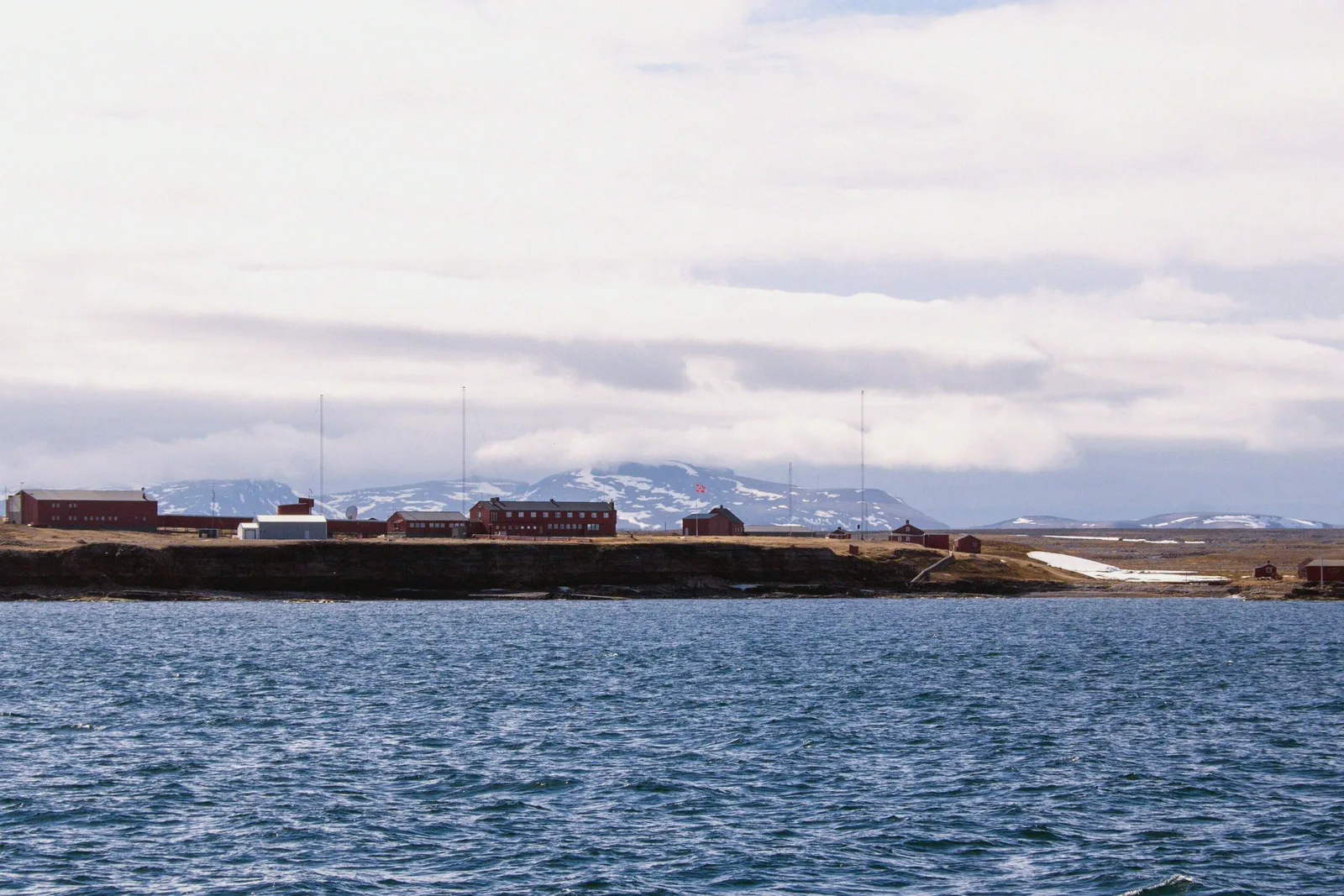
Svalbard stands out in Russia's influence activity against Norway, Kari Aga Myklebost, professor of history at UiT The Arctic University of Norway, told Nettavisen in an interview published on 1 November. For more than a decade, she said, Russian actors, including state media, have pushed a narrative that Russia holds a special position on Svalbard for historical reasons, challenged Norway's management of the archipelago and claimed that Norway breaches the Svalbard Treaty.
Her research points mainly to Russia's foreign service, above all the consulates general in Barentsburg and Kirkenes and to some extent the embassy in Oslo, as the actors behind influence activity in the north, Myklebost told Nettavisen. She described three aims, visible since 2014: to delegitimise the sanctions against Russia, to spread the Kremlin's narratives on Ukraine and to stigmatise voices in the north that criticise Russia's authoritarian turn.
Myklebost is one of the authors, with Stian Bones, also a professor of history at UiT, and Thomas Nilsen, editor of The Barents Observer, of "Hybrid threats in high latitudes: Facing Russia on Svalbard", published in December 2025 by the European Centre of Excellence for Countering Hybrid Threats (Hybrid CoE) in Helsinki. The report says Russia has escalated its use of "grey-zone provocations, history-based propaganda, and paramilitary and religious symbolism on Svalbard" since 2014. Norway's Police Security Service (PST) wrote in its 2026 threat assessment that the northernmost counties and Svalbard are "of particular interest and therefore especially exposed to intelligence and influence activity", naming "the Russian presence on Svalbard" (translated from Norwegian).
Russia rejects such accounts. In December 2024 its foreign ministry called claims of planned Russian hybrid attacks on Svalbard "nothing but rumours, conjecture and fakes" (translated from Russian), and said Russia was ready for "constructive interaction" with Norway under the 1920 Svalbard Treaty (translated from Russian).
A laboratory on Bjørnøya
On 16 June 2023, the Telegram channel Mash posted that the US Department of Defense planned a military facility with a virology laboratory on Bjørnøya (Bear Island), Svalbard's southernmost island, and that Norway had given its preliminary approval. It named no source beyond "our informed interlocutor" (translated from Russian). That evening, the state broadcaster Channel One's news programme Vremya, citing Telegram channels, reported that "an American biolab may appear" in the Barents Sea (translated from Russian). Natalia Belisheva of the Kola Science Centre later repeated the claim at a Russian Geographical Society conference in Murmansk: "It will be a virus-biological laboratory by the Pentagon," The Barents Observer reported on 30 October 2023.
Bjørnøya has been a nature reserve since a royal resolution of 2002, apart from a small area around the weather station on the north of the island, which is reserved for scientific work by the Norwegian Meteorological Institute and other scientific institutions. The Hybrid CoE report calls Mash's post disinformation about a laboratory "for the production of military biological weapons"; the post itself speaks of a virology laboratory. "The disinformation did not reach the international media," the report says. Myklebost told Nettavisen the story probably never travelled beyond Russia because the claims were too extreme for Western media to take seriously, and that such examples aimed at northern Norway are rare.
SvalSat and Article 9
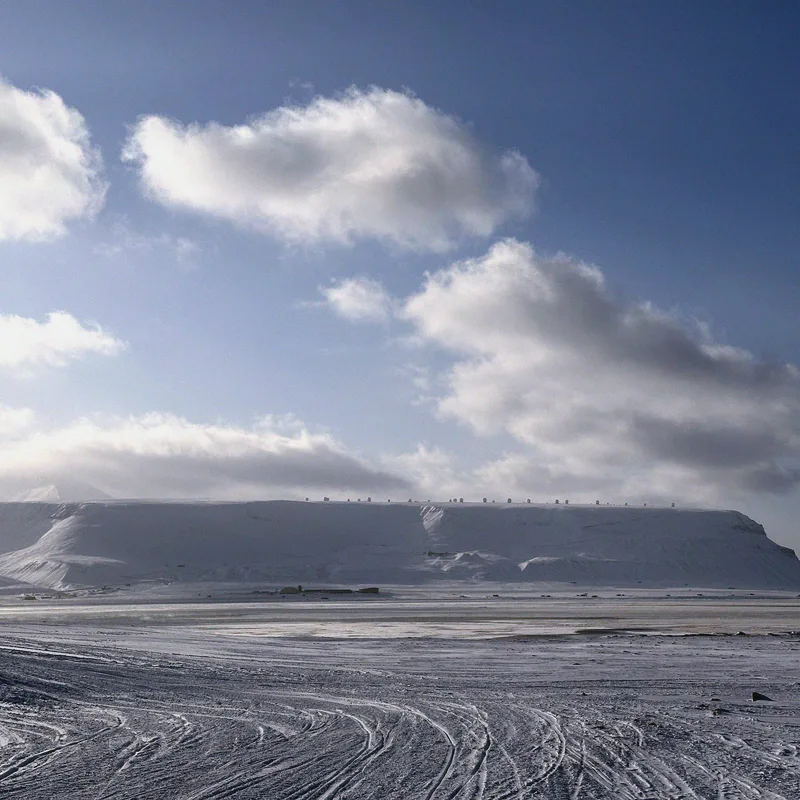
In a briefing on 11 September 2024, foreign ministry spokeswoman Maria Zakharova said Norway was drawing Svalbard into NATO military planning and called the SvalSat satellite station near Longyearbyen "in essence a dual-use facility" (translated from Russian). On 18 December 2024 she said, citing Norwegian media, that SvalSat was used to obtain information for US and Ukrainian intelligence and military agencies "to support combat operations against Russia" (translated from Russian), and that Article 9 of the Treaty obliges Norway not to create infrastructure that can be used for warlike purposes. On 14 March 2025, at a meeting at the ministry in Moscow, Russian officials told Norway's ambassador, Robert Kvile, that "dual-use facilities" on the archipelago could carry out military tasks, "including combat operations on the territory of third countries" (translated from Russian).
Prime Minister Jonas Gahr Støre answered the next day: "Norway fully respects the Svalbard Treaty" (translated from Norwegian). The government's 2024 white paper on Svalbard says Article 9 "is not a ban on all military activity" (translated from Norwegian), but is aimed at naval bases, fortifications and activities with warlike purposes; defensive measures are allowed, and the archipelago is covered by the North Atlantic Treaty, including its Article 5 on collective defence. Norwegian rules forbid ground stations on Svalbard from serving satellites with functions specifically for military purposes.
Cargo for Barentsburg
In late May 2022, 20 tonnes of goods in two containers for Barentsburg, the settlement of the Russian state mining company Trust Arktikugol, were stopped at the Storskog border crossing, NRK reported. On 15 June, Norway's foreign ministry refused an application to take them by road across mainland Norway to Tromsø and on by cargo ship, citing the sanctions against Russia. Russian officials warned of a humanitarian crisis. The consul general in Barentsburg, Sergei Gushchin, told NRK the situation was stable and that Trust Arktikugol had other supply routes. The Governor of Svalbard, Lars Fause, said Barentsburg received goods on the scheduled cargo boats like any other community, NRK reported.
On 29 June, Russia's foreign ministry summoned Norway's chargé d'affaires and said "unfriendly actions against Russia will inevitably lead to appropriate retaliatory measures", The Moscow Times reported. Foreign Minister Anniken Huitfeldt rejected the charge that Norway was breaching the Treaty. The shipment had been stopped because the sanctions forbid Russian companies to transport goods on Norwegian territory, she told NRK; Russia was not prevented from supplying Svalbard, only from moving goods across the mainland. Arild Olsen, leader of the Longyearbyen local council, told NRK he saw no breach of the Treaty and called the Russian reaction out of proportion to the facts. The speaker of the State Duma, Vyacheslav Volodin, asked parliament's foreign affairs committee to review the maritime delimitation agreement with Norway, NRK reported.
On the weekend of 2 and 3 July, a Norwegian haulier drove the two containers from the Storskog crossing about 800 kilometres to Tromsø, The Barents Observer reported; they left Tromsø on 5 July on a Norwegian cargo ship. Norway had never intended to stop supplies to Svalbard, the foreign ministry told NRK. "We are glad that this case has been resolved in a good way," its spokesperson, Ane Haavardsdatter Lunde, told NRK, The Barents Observer reported. Gushchin called the outcome the result of intense negotiations. Arild Moe, a Russia researcher at the Fridtjof Nansen Institute, told NRK that many in Russia saw the affair not as a result of the sanctions but as a Norwegian attempt to push Russia out of Svalbard. The Hybrid CoE report calls stories of "Norway's blockade" creating a humanitarian crisis in Barentsburg "unfounded".
Correction, 3 November 2026: an earlier version said the Telegram channel claimed a laboratory for biological weapons. Its post spoke of a virology laboratory; "biological weapons" is the Hybrid CoE report's description.
Correction, 3 November 2026: an earlier version said a Norwegian haulier collected the two containers in Murmansk, and that the foreign ministry's spokesperson spoke to The Barents Observer. The haulier drove them from the Storskog border crossing to Tromsø, and she spoke to NRK, as The Barents Observer reported.
Coverage: t.me, Norwegian Police Security Service, Ministry of Foreign Affairs of the Russian Federation, Channel One Russia, The Barents Observer, TV 2, The Moscow Times, Nettavisen, NRK