 Svalbard
From weather forecasts to hypersonic missiles to the Russian fleet on the Kola Peninsula: why the Arctic is strategically important for defence
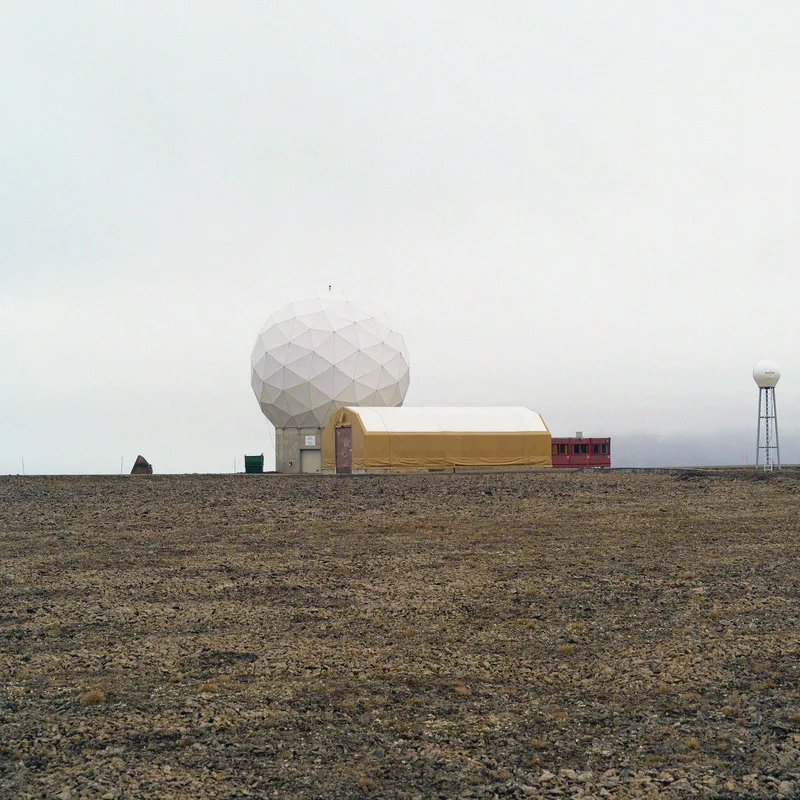
General Luciano Portolano, Italy's Chief of the Defence Staff, said in Rome on 29 October that Svalbard is one reason the polar regions matter for Italian defence. He said many polar-orbit weather satellites send data to Svalbard, and two seabed cables carry it on to the mainland. One was cut in January 2022 for reasons never fully clarified, he said. Communications across the archipelago then depended on a single link.
He spoke at the Second National Defence Conference on the Arctic and Antarctica, held at the Centre for Advanced Defence Studies (CASD). Defence Minister Guido Crosetto had spoken earlier and shown a map. Portolano described the poles as a roof and a foundation: orbits and trajectories above, cables and submarines below. He said satellites, ground stations, sensors and long-range weapons link the poles into one network. Events in Svalbard or the Barents Sea can therefore affect observation and communication thousands of km away.
Portolano said Finland and Sweden joining NATO means every Arctic Council member except Russia is now in the alliance. Italy's first military defence strategy document lists the Arctic among areas of significant interest. The wider Mediterranean stays the main theatre for Italian forces. He said Russia's Northern Fleet, based on the Kola Peninsula, is the only one able to reach the Atlantic without using straits that NATO controls. In March, units including the destroyer Andrea Doria were recalled to the Mediterranean during a NATO exercise in the far north. He named this horizontal escalation. He added that a permanent Arctic shipping route, which Beijing terms the Polar Silk Road, would rival Suez.
He listed gradual moves typical of the grey zone: a research station with a satellite dish, a continental shelf claim, a port that can become a logistics base. He cited Russian-Chinese joint Arctic patrols, begun in 2024, and a 22 September agreement between the United States, Denmark and Greenland on third-country investment. Operation Arctic Sentry has put allied activity under one command since February, he said, and Forward Air Forces Finland have been present since June. He also noted the EU's Arctic strategy of 20 October.
Asked about lessons from the poles, he said that at -40 °C, batteries lose range, drones struggle to fly and materials turn brittle. He described polar capabilities as a laboratory of resilience for the whole military. Security now depends more on interdependence than on distance, he said.
Coverage: Il Sole 24 ORE