Svalbard Seed Vault Prize to Protect At-Risk Collections
Svalbard WirePublished 29 OctoberSummary of the article by SeedWorld.
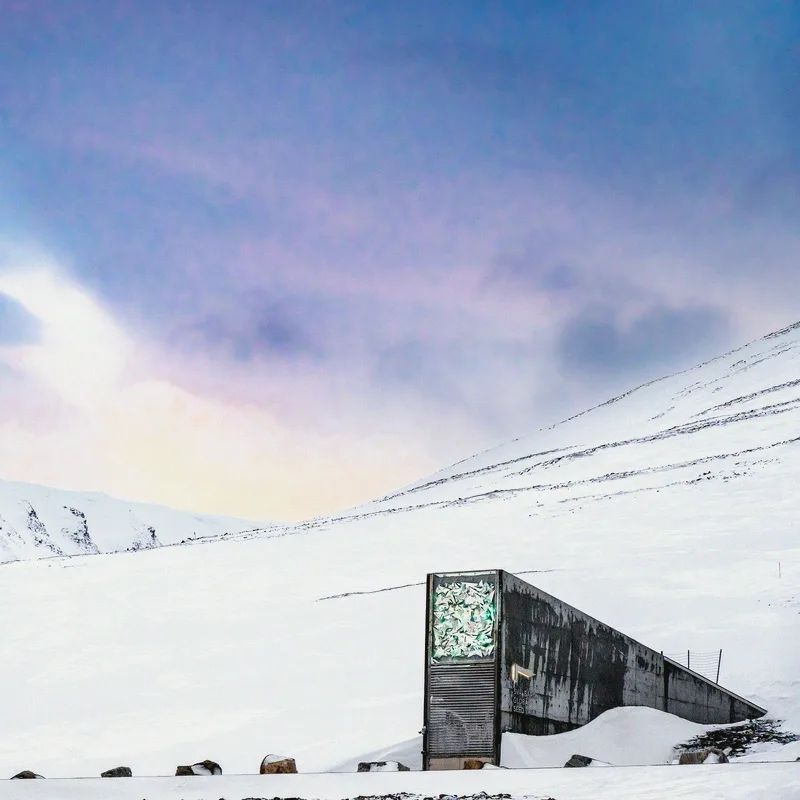
The entrance of the Svalbard Global Seed Vault, built into a snowy hillside. File picture, February 2025. Photo: Michael Major for Crop Trust, CC BY-SA 2.0, Wikimedia Commons.
The Crop Trust, the Government of Norway and NordGen (the Nordic Genetic Resource Center) run the Svalbard Global Seed Vault together. They announced that €50,000 from this year's Princess of Asturias Award for International Cooperation will go to protecting vulnerable seed collections. The vault is a backup store inside a mountain on Spitsbergen island, in Svalbard.
The money will go to the Emergency Reserve for Genebanks. The reserve helps eligible genebanks prepare safety duplicates of critical collections and deposit them in Svalbard. According to a press release, holdings that could stay unprotected because their owners have limited resources will come first.
Nils Kristen Sandtrøen, the Norwegian minister of agriculture and food, said the award recognises an international effort for crop diversity. He said that sending the money to collections still needing protection extends that cooperation to future generations.
The vault opened in 2008 and keeps long-term backup copies of seeds held by genebanks worldwide. The facility helps protect crop diversity against natural disasters, conflict, equipment failures and other threats.
The Crop Trust runs the Emergency Reserve jointly with the secretariat of the international plant genetic resources treaty. The reserve has already backed work on threatened collections. Guatemala made its first Svalbard deposit in February 2026, after emergency funding paid to restore damaged cold storage. It covered more than 930 samples, among them maize and beans. The reserve has also supported Ukraine in moving and securing its national collection, including help with a new facility.
Kent Nnadozie, Secretary of that treaty, said crop diversity is shared, and that losing it anywhere reduces the options of farmers and breeders everywhere. The report added that climate change, pests and diseases are creating new challenges for agriculture, and that the award funding will keep these collections available to researchers and plant breeders for crop improvement and food security.
Correction, 31 October 2026: an earlier version credited two statements to the press release. The source credits only the priority for under-resourced collections to it. The earlier version also said the vault's location protects crop diversity. The source says the facility helps protect it.
The vault outside Longyearbyen keeps 1.4 million seed samples from 135 genebanks in 84 countries and the international centres.
Each square is one genebank. Its area is the number of seed samples it keeps in the vault; the smallest are drawn at the smallest size that can be seen.
The vault has opened for deposits on 73 days since 26 February 2008; the largest day, 26 February 2008, brought 237,106 samples, and the latest, 13 October 2026, 16,514.
Each mark is one day the vault opened; its area is the samples that came in. The smallest days are drawn at the smallest size that can be seen. An outlined mark is a day the portal lists with no samples under it.
 Svalbard