 Svalbard
Land near Ny-Ålesund rose nearly two centimetres in 2024
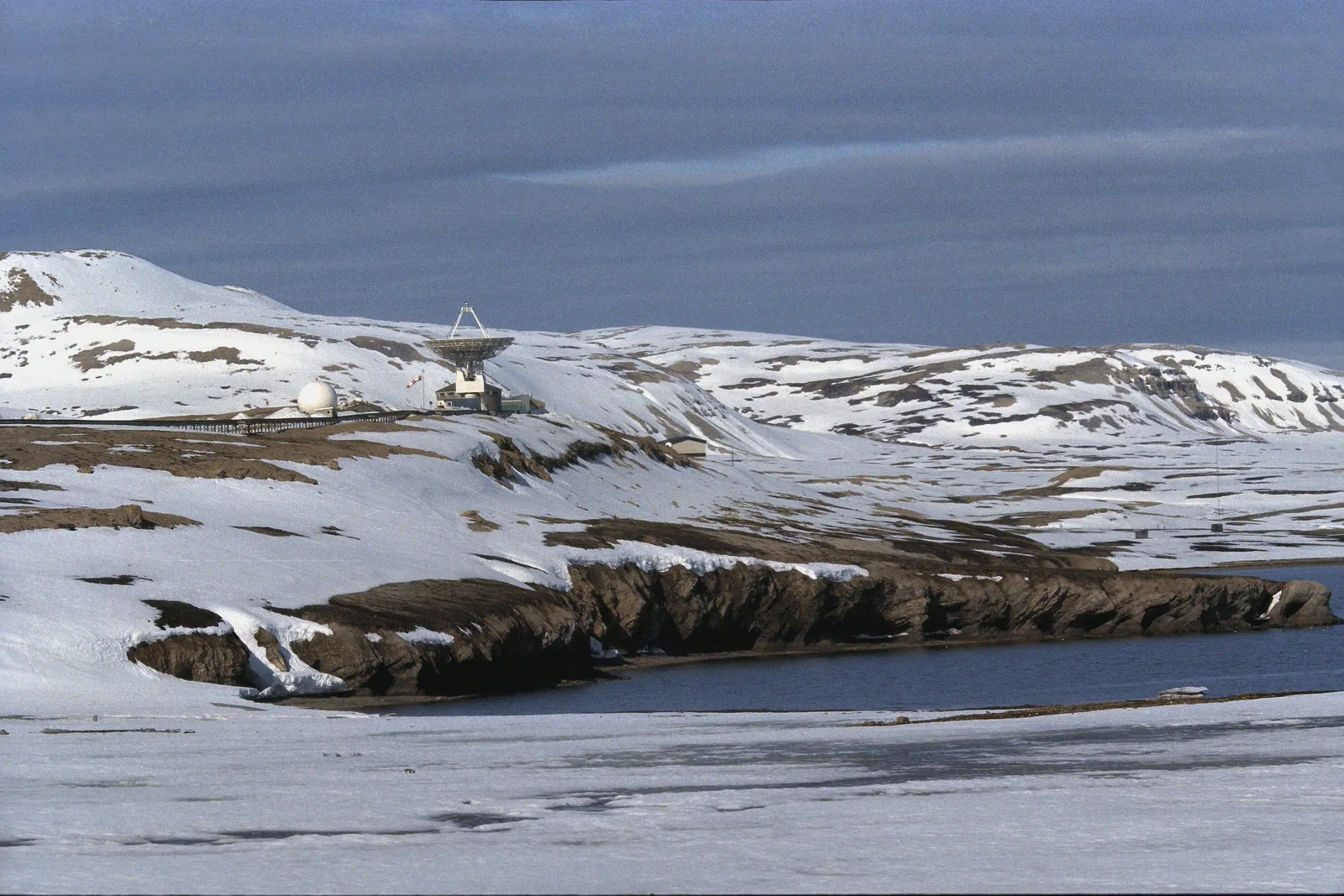
The land near Ny-Ålesund rose by nearly two centimetres between July and October 2024, twice the rise in a normal summer, according to measurements at the Geodetic Earth Observatory. Halfdan Pascal Kierulf and Carl William Lund of Kartverket (the Norwegian Mapping Authority) and Thomas Vikhamar Schuler of the University of Oslo wrote this in a piece from the Fram Centre, dated 6 August 2026 and published by The Barents Observer.
They described the observatory as one of the leading sites worldwide for tracking the planet's rotation and crustal movements. They wrote that the rise affected the global frame of reference, the coordinate system for exact positions on Earth, and has consequences for maps, property boundaries and navigation. Without correction, Kierulf, Lund and Schuler wrote, deviations can spread through the Earth observation system.
The authors gave the ice loss that summer as 61.7 gigatonnes, about 1% of the glacier mass. Of this, 42.1 gigatonnes came from the balance between snowfall and melt and 19.6 gigatonnes from calving icebergs. They wrote that the total is comparable to the Greenland ice sheet's loss in the same period, although Greenland is fifty times larger. Kierulf, Lund and Schuler wrote that much of the melt came in a six-week spell of temperatures well above normal. Kierulf also told NRK that the Earth observation system is not built for such variation and needs new ways to compensate.
Kierulf, Lund and Schuler named aviation, shipping, power supply, emergency response and mobile communications among the services that use GPS. They wrote that national agencies must take action. Arctic Today republished the piece, which says Kartverket is working to expand the satellite navigation network on Svalbard.
Coverage: NRK, The Barents Observer, Arctic Today