 Svalbard
Strategy for Ny-Ålesund Research Station
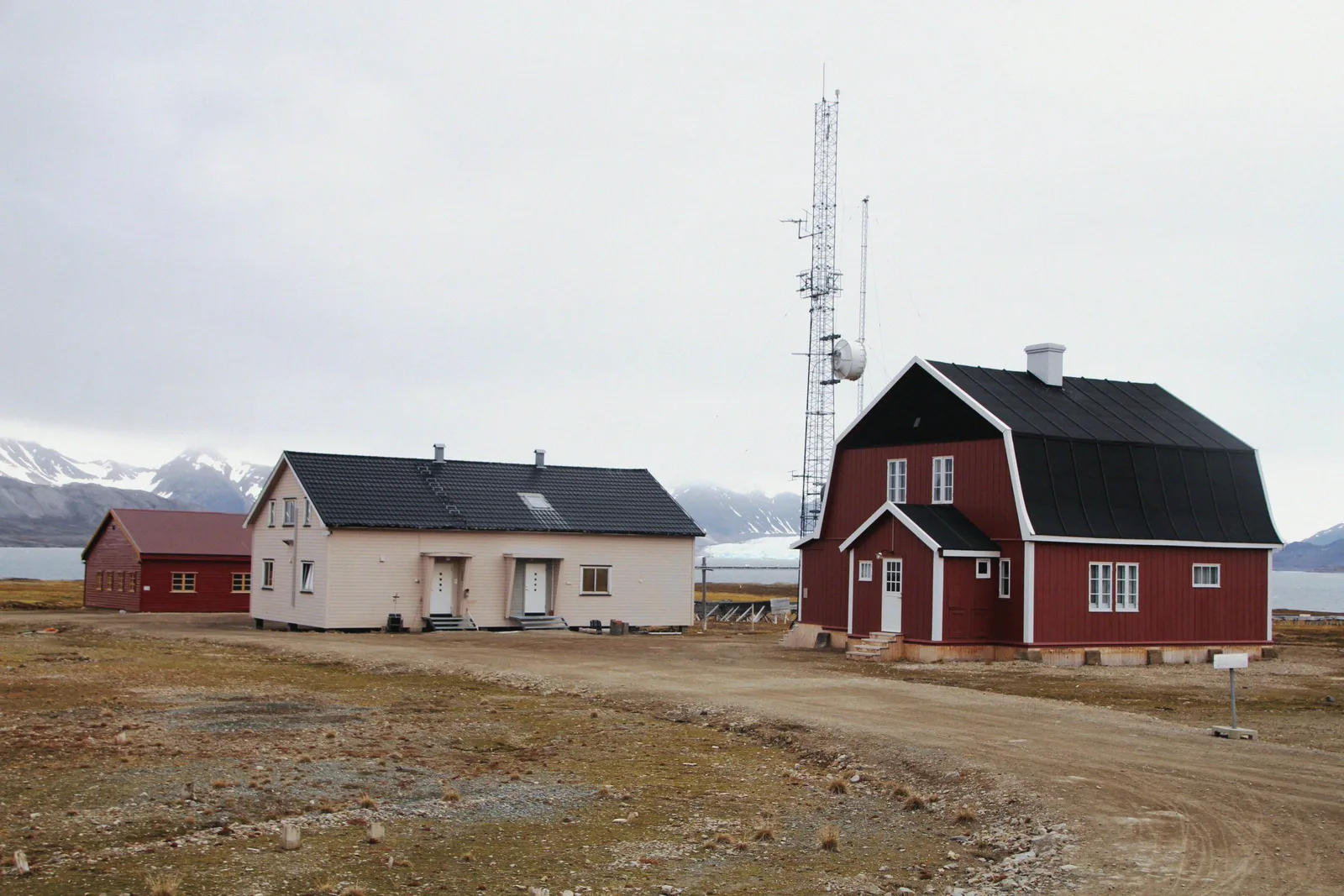
The updated strategy for the Ny-Ålesund Research Station sets out the prerequisites, framework conditions, and ambitions for research activities, and specifies the requirements that must be fulfilled to obtain access to Ny-Ålesund. While building on existing policy, the strategy also introduces new requirements related to language use, the labelling of physical infrastructure, and measures in cases of non-compliance.
Norwegian authorities have high ambitions for research in Svalbard. Ny-Ålesund is a research station under Norwegian research management, which facilitates climate and environmental monitoring and international cooperation in the natural sciences. Researchers from a wide range of institutions contribute to international cooperation and the development of new high-quality knowledge in environmental, climate and polar research. Cultural heritage research and management also form part of the research station’s activities.
In this strategy, the Government sets out objectives, principles and frameworks for Ny-Ålesund Research Station. Strategy for Research and Higher Education in Svalbard (2026), Meld. St. 26 (2023–2024) Report to the Storting (white paper) Svalbard (the Svalbard White Paper) and Meld. St. 14 (2024–2025) Report to the Storting (white paper) Secure knowledge in an uncertain world and National Security Strategy (2025) provide the overall framework for this strategy. This strategy is an update of Ny-Ålesund Research Strategy from 2019 and replaces it.
The purpose of the strategy is to further develop Ny-Ålesund as a research station for international scientific collaboration in the natural sciences. The strategy defines the conditions, frameworks and ambitions for research activities in Ny-Ålesund and is based on principles of research security and responsible international cooperation. The strategy also describes the expectations of Norwegian authorities regarding scientific quality and relevance, cooperation, openness, the sharing of equipment and data, and the coordination of research activities.
Since the 1960s, Norwegian authorities have facilitated Norwegian and international natural science research and environmental monitoring at Ny-Ålesund Research Station.
Norwegian authorities have made significant investments in research infrastructure, including specialised research buildings, shared laboratories and data communications via a fibre-optic cable from Longyearbyen, as well as costly projects to upgrade key buildings. Norwegian authorities also finance a large part of the operation of Ny-Ålesund through an annual grant from the national budget, benefiting all users of Ny-Ålesund. This funding is a prerequisite for maintaining Ny-Ålesund as a platform for international cooperation in the natural sciences.
Ny-Ålesund Research Station is one of the world’s northernmost year-round research communities, with easy access to well-established research infrastructure in an Arctic natural environment that is largely unaffected by local activity. This makes the station particularly well suited for Arctic research and observations. Several research actors have invested substantially in advanced scientific equipment and extensive field activities. Taken together, this has contributed to developing one of the world’s most advanced Arctic research stations.
Temperatures in Svalbard have increased more than anywhere else on Earth. Ny-Ålesund research station therefore has great value for climate and environmental monitoring. Ny-Ålesund has global significance as a reference area for climate change research and for measurements of greenhouse gases and airborne pollutants. Several Norwegian and international actors maintain long-term measurement series in Ny-Ålesund that provide important data for scientific research and international monitoring programmes and networks. Data from Ny-Ålesund contribute new and unique knowledge about a changing world.
The scope of this strategy encompasses all research activities based in Ny-Ålesund, including the entire Brøggerhalvøya and Kongsfjorden. The presence of researchers from many countries and institutions forms the basis for extensive international cooperation in the natural sciences, with particular emphasis on climate and environmental research. Research relevant to Norway’s environmental management and management is also conducted and is important for Norwegian authorities.
The Government’s objectives for research and higher education in Svalbard are set out in Meld. St. 26 (2023–2024) Report to the Storting (white paper) Svalbard (the Svalbard White Paper) and Meld. St. 14 (2024–2025) Report to the Storting (white paper) Secure knowledge in an uncertain world and form the basis for Strategy for Research and Higher Education in Svalbard and this Strategy for Ny-Ålesund Research Station. All activities must be carried out in accordance with the frameworks and principles set out in these documents, as well as in the National Security Strategy (2025), and relevant Norwegian legislation and regulations.
Ny-Ålesund Research Station shall strengthen its role as a leading research station for Arctic polar research and continue to facilitate internationally leading polar research of high quality, global significance and relevance.
Research shall build on the area’s unique character as a natural science laboratory in a largely undisturbed Arctic natural environment, where local environmental impacts and disturbance from human activity shall be kept to a minimum.
Research activities shall be of such a nature that they can only, or best, be carried out in Ny-Ålesund. It is also important that other activities in the area, particularly travel and tourism, do not compromise research activities or the quality of research data.
The development of the research station shall promote increased coordination, sharing and further development of common research infrastructure and logistics. Access and use shall be open and managed within clear and coherent frameworks under Norwegian management rather than through separate or institution-specific solutions.
Specific provisions for Ny-Ålesund Research Station described in this chapter must be viewed in relation to the frameworks and principles set out in Strategy for Research and Higher Education in Svalbard.
Norsk Polarinstitutt (the Norwegian Polar Institute) manages Ny-Ålesund Research Station and has primary responsibility for implementing and following up this research strategy locally. This work must be viewed in relation to the Svalbard Research Office, which is responsible for implementing the overarching strategy for research and higher education in Svalbard.
Kings Bay (the state-owned company that runs Ny-Ålesund) owns the land and most of the buildings in Ny-Ålesund. The company is responsible for operating, maintaining and developing research infrastructure in Ny-Ålesund for shared use, as well as providing other facilities and services necessary for research activities.
Norwegian authorities expect all research activities in Ny-Ålesund to be conducted in accordance with the principles of responsible international cooperation, including openness, academic freedom, integrity and research security. All actors shall contribute to strengthening the ability to identify, assess and manage risks in a manner that safeguards these principles.
• To conduct research in Ny-Ålesund, the following requirements apply:
• Research and environmental monitoring must be within the natural sciences or cultural heritage and must build on the established infrastructure and field opportunities available in the area.
• Research projects must be registered in Research in Svalbard (RiS) before arrival in Ny-Ålesund.
• Everyone conducting research in Ny-Ålesund must have sufficient proficiency in English or Norwegian to communicate with Kings Bay AS and the Norwegian Polar Institute. Failure to meet this requirement may result in Kings Bay AS declining to provide accommodation and board in Ny-Ålesund, for safety and emergency preparedness reasons.
Ny-Ålesund is an almost pristine High Arctic natural environment that provides a unique basis for research on climate, the environment and global processes. Unique long-term climate and environmental monitoring timeseries have been established in Ny-Ålesund. It is important to maintain and continue these long-term measurement series.
Ny-Ålesund and its surrounding area are a limited resource, and several research and monitoring activities depend on an environment that remains largely unaffected by local activities. The historic environment is an important cultural heritage area in Svalbard. Consequently, cultural heritage research is also conducted in Ny-Ålesund.
Norwegian authorities expect that research conducted in Ny-Ålesund is consistent with research ethics principles, is of high quality, and is relevant in terms of benefits to society and science. Knowledge generated through environmental monitoring and research at Ny-Ålesund Research Station is also important for Norwegian environmental management.
Research in the Arctic is of global importance because the region serves as an early indicator of the global consequences of climate change, including impacts on Arctic ocean currents, ice melt and permafrost. Research conducted in Ny-Ålesund can make important contributions to addressing shared global challenges, and cooperation among leading international institutions and research communities is essential to achieve this. It is a clear ambition of the Norwegian authorities that international natural science research in Ny-Ålesund remains at the forefront of global research.
• It is expected that:
• research projects maintain a high scientific standard
• cooperation is established with the best international partners in Ny-Ålesund and elsewhere in order to strengthen scientific quality
• results are published in English in open, international peer-reviewed journals
• research provides important contributions to Norwegian environmental management and/or the international research frontier.
In the owner’s management of land and property, research management, and the development of Ny-Ålesund Research Station, as well as in the prioritisation of research activities, these expectations may be taken into account.
There is a need to recruit future polar researchers. Ny-Ålesund Research Station provides an excellent arena for the training of new polar scientists. Master’s and doctoral students may therefore undertake parts of their education in Ny-Ålesund in connection with ongoing research projects. However, teaching and course activities shall not become a dominant activity in Ny-Ålesund.
The Svalbard White Paper states that UNIS (the University Centre in Svalbard) shall be the sole provider of higher education in Svalbard. UNIS provides higher education on behalf of the mainland Norwegian universities and may use facilities in Ny-Ålesund for teaching at all levels. For educational and course activities in Ny-Ålesund, the following criteria must be met:
• The teaching is research-based.
• The courses make use of research infrastructure or unique field opportunities available at the site.
• The courses fall within the natural sciences.
• Sufficient station capacity is available.
• Due consideration is given to the protection of both the cultural heritage environment and the natural environment.
Many field-based research activities require permission from Sysselmesteren (the Governor of Svalbard), pursuant to the Svalbard Environmental Protection Act and associated regulations. All research and educational activities shall take into account the need to minimise the footprint and overall impact on the environment. This also applies to the valuable cultural heritage environment of the former mining settlement of Ny-Ålesund.
This can be achieved through coordination of activities and the sharing of infrastructure, data and fieldwork results, in accordance with the principles outlined in this strategy. In Ny-Ålesund, institutions cooperate through the flagship programmes (see Section 3.8) and the shared use of research facilities in order to reduce this impact.
Activities in Ny-Ålesund shall be carried out in accordance with the Ny-Ålesund land-use plan. It is very important that activities not related to the operation of the research station remain limited.
Ny-Ålesund has a history as a mining town, with an established building stock and extensive infrastructure. Following the closure of mining activities, the settlement was gradually and carefully transformed into a modern research station. Buildings and infrastructure have been assigned new functions, while the entire settlement is maintained and preserved as a cultural heritage site. The research station offers excellent accessibility and is highly suited to research activities in a near-pristine natural environment.
The Svalbard White Paper states that research in Svalbard shall primarily be conducted from established communities and research stations. Ny-Ålesund Research Station shall therefore serve as the base for field research activities in the surrounding region. In accordance with this principle, further development and the establishment of major permanent infrastructure shall, as a general rule, take place within the land-use planning area and within the framework of Ny-Ålesund Research Station.
Research institutions are responsible for complying with legislation and HSE requirements applicable to their operations. Pursuant to Regulations relating to safety in field etc. in Svalbard (Field Operation Safety Regulations), all activities must be planned and carried out in a manner that safeguards the personnel and the environment. Research institutions are responsible for ensuring compliance with the regulations.
Institutions are also responsible for sound logistics arrangements, documented safety training, and systematic safety management based on plans and risk assessments. Field activities shall be conducted in accordance with current regulations in Svalbard and must be thoroughly planned, including the necessary risk assessments, preparedness measures and appropriate competence.
Documented completion of a safety course is a prerequisite for renting firearms in Ny-Ålesund. All personnel must comply with rules and principles for polar bear safety and, when required, complete the relevant safety training.
All research involving the use of boats shall comply with applicable regulations in Svalbard. Individual research institutions are responsible for ensuring that researchers operating boats obtain the necessary training and certification.
Ny-Ålesund Research Station offers unique facilities, well-developed infrastructure and a comprehensive observation system for interdisciplinary research. The area available for new buildings in Ny-Ålesund is limited. It is therefore important that existing buildings are used efficiently.
Kings Bay AS has established several thematic buildings and laboratories associated with prioritised scientific disciplines, including Veksthuset (terrestrial research), Gruvebadet (atmospheric research) and the Marine Laboratory. In order to improve the utilisation of laboratories and buildings, these may be made available for interdisciplinary use. Kings Bay AS also provides the research vessel Teisten for shared use.
Atmospheric measurements are carried out at the Zeppelin Observatory, which is operated by the Norwegian Polar Institute. This research infrastructure is available to all research actors in Ny-Ålesund through agreements with the Norwegian Polar Institute.
Kings Bay AS’s coordination, development and operation of shared research infrastructure and logistics are essential to efficient use of capacity and reducing environmental impacts. Further development of buildings and infrastructure shall be carried out within the framework of operations of Kings Bay AS or Norwegian governmental institutions.
A gradual transition is envisaged whereby research institutions make greater use of shared research laboratories. At the same time, conditions shall continue to facilitate observation programmes and long-term time series that provide data to pan-Arctic and global observation networks that are important for maintaining the shared international knowledge base. Research institutions may, when necessary, contribute research infrastructure. This is subject to approval by Kings Bay AS in consultation with the Norwegian research management. All research instruments and installations shall be labelled with the name of the owner institution, a unique object identifier linked to a register containing information about the type of instrument and the parameters measured, and the project identification number registered in the RiS database.
The sharing of information is essential for establishing communication among ongoing projects and initiatives. The RiS database is the primary tool for registering projects and obtaining information about research activities in Ny-Ålesund.
Four flagship programmes have been established and serve as scientific networks for discussion, information exchange and coordination within atmospheric research, glaciological research, marine research and terrestrial ecosystem research. The scientific activity in Ny-Ålesund is primarily organised through these flagship programmes. Changes, such as the establishment of new flagship programmes, shall be consistent with the framework of this strategy. Proposals for change shall first be discussed in the Ny-Ålesund Science Managers Committee (NySMAC), after which the Norwegian research management will make the final decision.
A central objective for research in Ny-Ålesund is a high degree of openness and sharing of research results and data, in accordance with Norwegian policies on open science, and the FAIR principles. [1] Data and results sharing are prerequisites for quality assurance, reuse and international cooperation, and are particularly important given the complex climate and ecosystem processes studied in the area and for advancing the research frontier.
Svalbard shall be a leading area for open publishing and data sharing. Norwegian authorities expect researchers and institutions in Ny-Ålesund to:
• have a data management plan for all research projects describing the handling, storage, sharing and any restrictions associated with data
• prepare research data for reuse, including relevant metadata, in accordance with the FAIR principles
• store research data securely at their home institution or in appropriate national or international repositories
• make research data and metadata available as soon as possible, while allowing a limited period of exclusive use when scientifically justified
• contribute to open publishing of scientific results in accordance with current open science guidelines
• assess the need for export licences when sharing data outside Norway or with foreign nationals.
Data collected in Ny-Ålesund should, whenever possible, be shared and made available through the Svalbard Integrated Arctic Earth Observing System (SIOS) in accordance with SIOS data management practices. This facilitates standardisation, quality assurance and comparability across projects and time series.
Certain important scientific instruments, such as the VLBI radio telescopes at the Geodetic Observatory of Kartverket (the Norwegian Mapping Authority), require specific radio restrictions in order to function optimally. Radio frequency interference reduces data quality and may invalidate entire measurement series. Ny-Ålesund is therefore an area subject to both general and specific radio restrictions, and it is an objective to avoid all unnecessary radio transmissions within the area.
The Norwegian regulations concerning general authorisations for the use of radio frequencies (General Authorisations Regulations) do not apply to the frequency range 2-32 GHz within a radius of 20 km from Ny-Ålesund, except wh